

Corporate Game Shows vs Outdoor City Scavenger Hunts for Team Bonding
Choosing the right team-building format can make or break your next corporate event. Two of the most popular options — indoor corporate game shows and outdoor city scavenger hunts — deliver very different energy, outcomes, and logistics. This side-by-side comparison helps event planners, HR managers, and team leaders in Australia pick the format that best fits their goals, group size, and budget.
What Are Corporate Game Shows & City Scavenger Hunts?
Corporate Game Shows
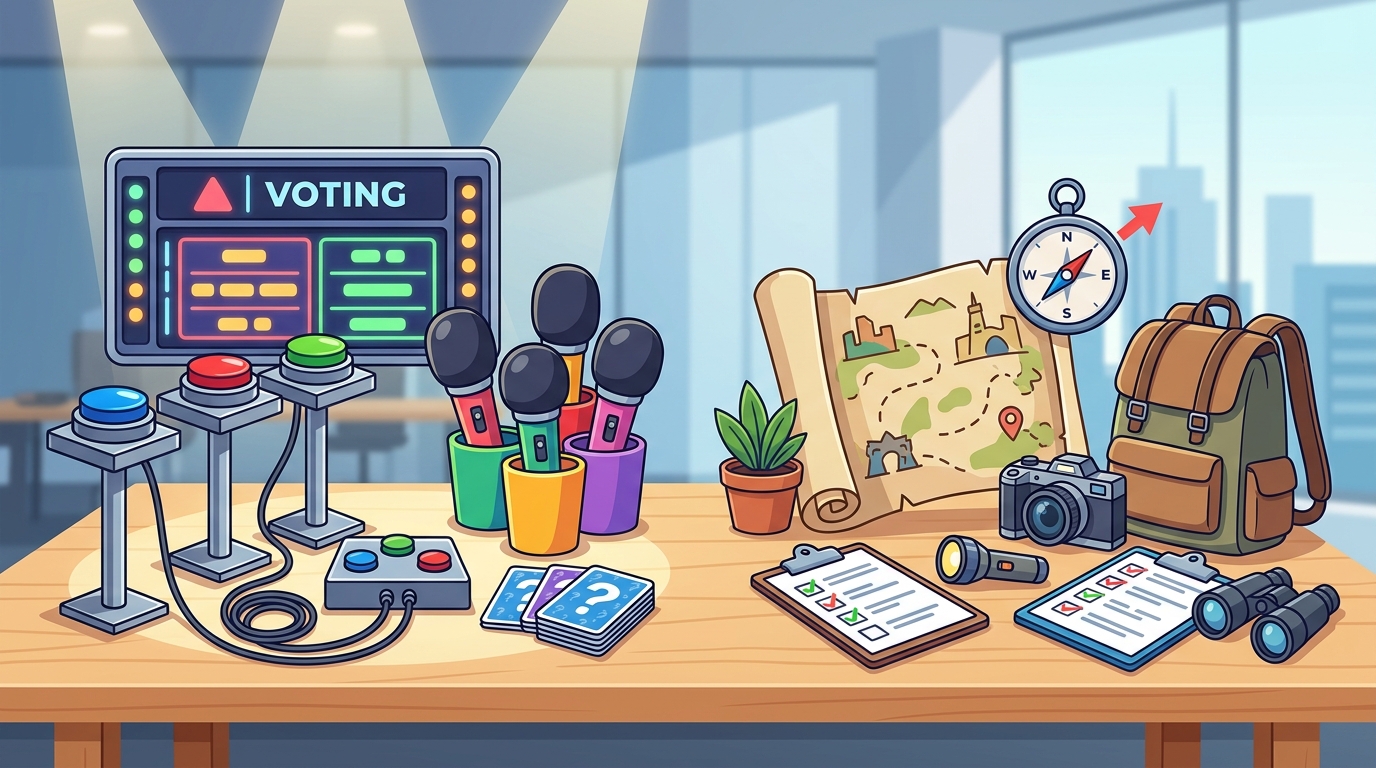
Corporate game shows recreate the buzz of television quiz programmes inside a conference room or event venue. Professional hosts, buzzers, scoreboards, and themed rounds keep energy high while teams compete on trivia, puzzles, and physical mini-challenges. Formats range from Family Feud–style survey rounds to Minute-to-Win-It countdown tasks, and content can be customised with company-specific questions or industry themes.
Outdoor City Scavenger Hunts
City scavenger hunts send teams out into the streets armed with clue sheets or GPS-enabled apps. Participants navigate landmarks, photograph challenges, solve riddles, and interact with local surroundings — all while racing a clock. Modern versions use smartphone technology and live leaderboards to keep the competitive edge sharp.
Head-to-Head Comparison Table
| Factor | Corporate Game Show | City Scavenger Hunt |
|---|---|---|
| Setting | Indoor venue or conference room | Outdoor — streets, parks, landmarks |
| Duration | 60–120 minutes | 90–180 minutes |
| Physical Activity | Low to moderate | Moderate to high (walking 3–8 km) |
| Weather Dependent | No | Yes — rain plans needed |
| Ideal Group Size | 20–500+ | 10–300 |
| Customisation | Company trivia, branding, themed rounds | City-specific clues, photo missions, charity tie-ins |
| Primary Skills | Quick thinking, communication, morale boost | Navigation, problem-solving, creativity, collaboration |
| Accessibility | High — controlled environment | Moderate — requires mobility |
| Cost Range (AUD) | $40–$85 per person | $35–$75 per person |
Engagement & Participation
Game Shows Keep Every Person in the Room
One of the biggest advantages of a corporate game show is whole-room engagement. A live game show works well for large groups because it keeps everyone engaged at the same time through fast-paced interaction, teamwork, and friendly competition. Unlike breakout-style activities, nobody drifts to the sidelines when there are buzzers, timers, and a charismatic host driving the energy. Game-show formats are also naturally inclusive — they don't require athleticism, outdoor confidence, or mobility, so every team member can contribute equally.
Scavenger Hunts Spark Exploration and Autonomy
City scavenger hunts flip the script on engagement by giving teams freedom. Small groups self-navigate, make strategic decisions about which clues to tackle first, and bond through shared discovery of their city. Employees are able to build deeper relationships with each other through tasks that highlight creative and strategic skills that may not be displayed in their respective roles. The novelty of being outdoors — photographing street art, solving riddles at historic landmarks, or racing to a hidden café — creates strong emotional anchors that people talk about long after the event.
Skills Developed by Each Format
Game Shows: Communication Under Pressure
Timed rounds, rapid-fire questions, and the need to delegate answers build communication speed and decision-making confidence. Corporate game shows elevate team dynamics by merging structured play with measurable mechanisms that amplify engagement, cultivate collaboration, and boost morale. Tech teams benefit from problem-solving rounds, finance groups from accuracy under time pressure, and hospitality teams from service-scenario challenges.
Scavenger Hunts: Real-World Problem-Solving
Navigating unfamiliar streets and cracking multi-step clues mirrors genuine workplace challenges more closely than quiz-style formats. Scavenger hunts sharpen problem-solving skills, boost creativity, and foster collaboration because teams must adapt to unexpected situations in real time. The physical element also promotes wellbeing — a growing priority for Australian employers investing in corporate wellness programmes.
Logistics, Weather & Accessibility
Game Shows: Predictable and Controlled
Because game shows run indoors, you eliminate weather risk entirely. Setup typically requires AV equipment, a projection screen, and a stage area — most conference venues already offer this. Professional facilitators handle the flow from start to finish, meaning the organisers can relax once the event begins. This makes game shows ideal for mid-conference energiser slots or evening entertainment after a day of meetings.
Scavenger Hunts: Exciting but Exposed
Outdoor events carry weather risk. In Australian cities, summer heat can be as disruptive as rain. You'll need a wet-weather contingency and should consider accessibility for team members with mobility limitations. However, the logistical flip side is minimal venue cost — you're using the city as your playground, which can reduce spend on room hire and catering.
Group Size Suitability
Game shows scale impressively for large conferences. Formats that use audience-response technology can engage hundreds simultaneously. Scavenger hunts are better suited to groups that can split into teams of 4–6, and very large groups (200+) require sophisticated app-based platforms and extra marshals to manage logistics smoothly.
For teams under 30, a scavenger hunt often feels more personal and immersive. For groups over 100, a game show tends to deliver more consistent energy across the full audience.
Cost Considerations for Australian Teams
Both formats sit in a similar per-head price bracket, but cost drivers differ:
- Game shows: Major costs include the host or MC, AV hire, and customisation of question content. Venue is usually already booked for the conference.
- Scavenger hunts: Costs centre on app licensing or clue design, facilitator fees, and contingency planning. Venue hire is often zero since you're outdoors, but you may need a start/finish meeting point.
Providers like Hidden Door Experiences offer both game show and outdoor team building formats across Sydney, Melbourne, Brisbane, and regional Australia — making it easy to compare quotes for either option from a single supplier.
When to Choose Each Format
Pick a Corporate Game Show When…
- Your event is part of a conference or multi-session day and you need a contained, time-boxed energiser.
- Participants have mixed mobility levels and you want guaranteed inclusivity.
- You need to reinforce specific company knowledge — product launches, compliance training, or values alignment — through customised trivia.
- Your group exceeds 150 people and you need everyone engaged simultaneously.
- Weather unpredictability or an evening time slot rules out outdoor options.
Pick a City Scavenger Hunt When…
- Your team is visiting a new city and you want them to experience the local culture while bonding.
- Physical movement and fresh air are priorities — especially after long periods of desk work.
- You want smaller team units (4–6 people) to build deeper interpersonal connections.
- Your budget allows flexibility and you want minimal venue overheads.
- Creative, photo-based challenges appeal more than quiz-style competition to your team culture.
Can You Combine Both? The Hybrid Approach
Many event organisers are discovering that the best results come from blending formats across a full-day agenda. A morning city scavenger hunt gives teams shared stories and energy, while an afternoon or evening game show channels that energy into friendly competition back at the venue. Hidden Door Experiences, for example, offers Amazing Race–style outdoor challenges alongside their popular Game Show Classics format — both deliverable on the same day with a single production team.
This hybrid model addresses different personality types: extroverts thrive in the game-show spotlight, while quieter team members often shine during the strategic, self-directed scavenger hunt phase.
Key Takeaways
- Game shows excel at high-energy, whole-room engagement — ideal for conferences, large groups, and weather-proof scheduling.
- Scavenger hunts build deeper interpersonal bonds through shared exploration, physical activity, and real-world problem-solving.
- Neither format is universally better — the right choice depends on group size, venue, mobility requirements, and your primary team-building objective.
- Combining both formats in a single day delivers the widest range of team-building outcomes and keeps energy varied.
- Work with a specialist provider who offers both options so you can tailor the experience to your team's unique needs.
Frequently Asked Questions
Are corporate game shows only suitable for large groups?
No. While game shows scale exceptionally well for audiences of 100 or more, many formats work effectively with groups as small as 20. The key is choosing a format — such as team-based trivia or Minute-to-Win-It challenges — that keeps smaller groups actively involved rather than watching from the sidelines.
What happens if it rains during a city scavenger hunt?
Reputable providers always prepare a wet-weather contingency. This might mean shifting to a covered urban route, moving the hunt indoors to a museum or shopping precinct, or switching to a hybrid digital format. Always confirm the rain plan before booking.
Which format is better for improving workplace communication?
Both formats improve communication, but in different ways. Game shows build rapid-fire verbal communication and decision-making under pressure. Scavenger hunts develop strategic communication, active listening, and collaborative planning over a longer timeframe. If your team struggles with day-to-day communication flow, a scavenger hunt's extended interaction time may deliver stronger results.
Can game shows or scavenger hunts be customised with company content?
Yes. Game shows commonly incorporate company-specific trivia, product knowledge rounds, or branded visuals. Scavenger hunts can include clues tied to company values, charity challenges, or tasks that require participants to apply industry knowledge. Customisation significantly increases the relevance and retention of team-building outcomes.
How long does each format typically last?
Corporate game shows usually run 60–120 minutes, making them ideal mid-conference energisers or evening entertainment. City scavenger hunts typically need 90–180 minutes to allow enough exploration time and a proper debrief at the end.
What is the cost difference between the two formats in Australia?
Both formats generally fall in the $35–$85 per person range in Australia, depending on group size, customisation, and provider. Game shows may carry higher AV costs, while scavenger hunts may require app licensing fees. Request quotes for both from your provider to compare accurately.