
How to Organise a Charity Bike Building Event for a Large Corporate Conference
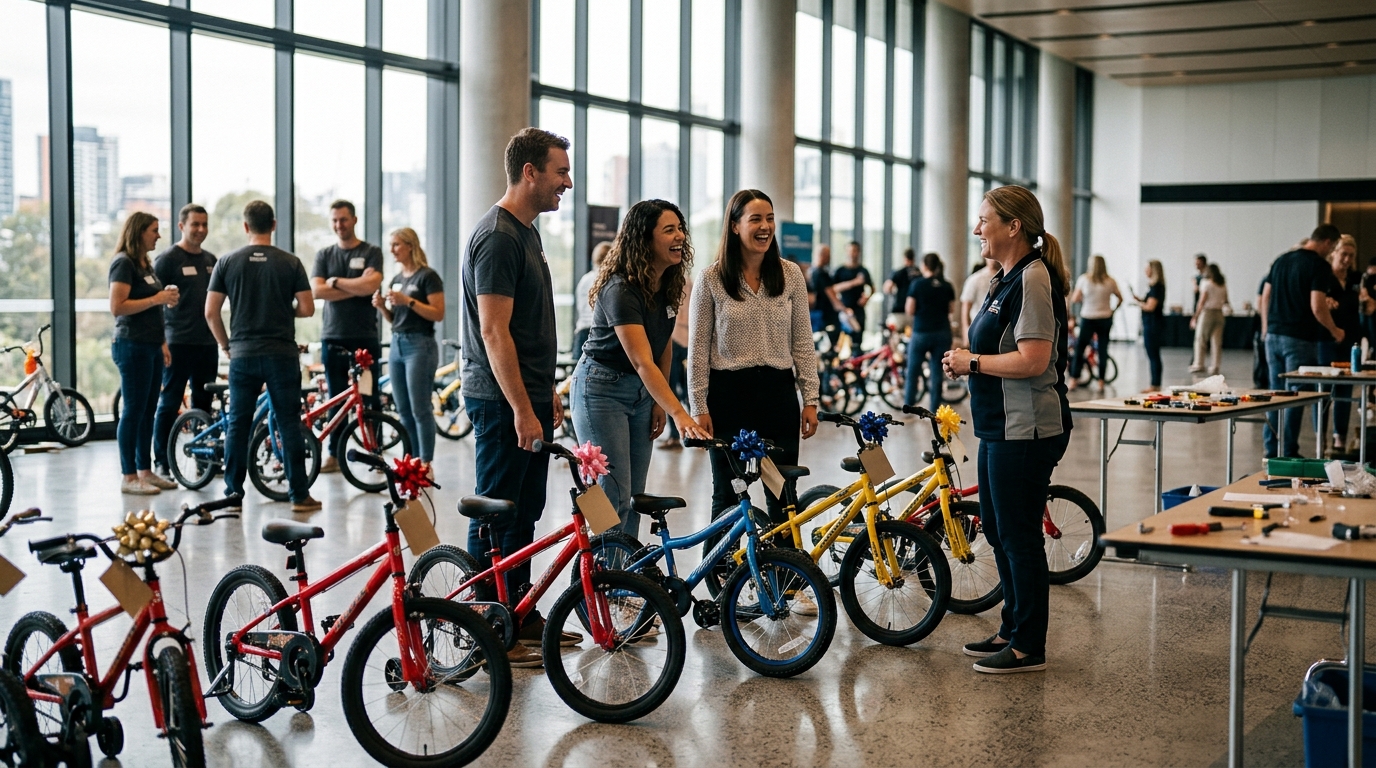
A charity bike building event is a team building activity where corporate groups assemble children's bicycles that are then donated to kids in need through a charity partner. It combines hands-on collaboration, friendly competition, and genuine social impact into a single conference session. For large conferences, it delivers something rare: an activity that energises hundreds of delegates while creating a tangible, emotional outcome everyone remembers. Whether you are planning a national sales conference or an annual offsite, this guide walks you through every step of organising a charity bike build that runs smoothly and leaves a lasting impression on your team and community.
Why Charity Bike Builds Work at Conferences
Corporate Social Responsibility (CSR) is the practice of integrating social and environmental goals into business operations. Research consistently shows a positive link between CSR activities and employee engagement. According to Gallup, highly engaged teams are 21% more productive than those with low engagement, and purpose-driven activities deepen that connection.
Bike builds stand out because they produce a physical, emotionally charged result. Unlike trivia nights or icebreakers, every participant walks away knowing they contributed to something a child will ride. This is why charity team building activities consistently rank among the most requested formats for conferences and offsites across Australia.
Planning Timeline and Key Milestones
A well-run bike build does not come together overnight, especially for groups of 100 or more. Start the planning process early to lock in your venue, charity partner, and facilitator.
| Timeframe | Action |
|---|---|
| 8-12 weeks out | Confirm group size, budget, and date. Brief your team building provider. |
| 6-8 weeks out | Lock in venue and confirm charity partner. Discuss bike sizes needed. |
| 4 weeks out | Finalise run sheet, AV requirements, and team allocations. |
| 2 weeks out | Confirm catering, photographer, and on-site mechanic details. |
| Event day | Provider sets up bike stations, frames, tools, and challenge areas. |
Hidden Door Experiences recommends starting the planning process 9 to 12 months ahead for large conferences with travel or accommodation, and at least 6 to 8 weeks for simpler team days.
Venue Setup and Logistics
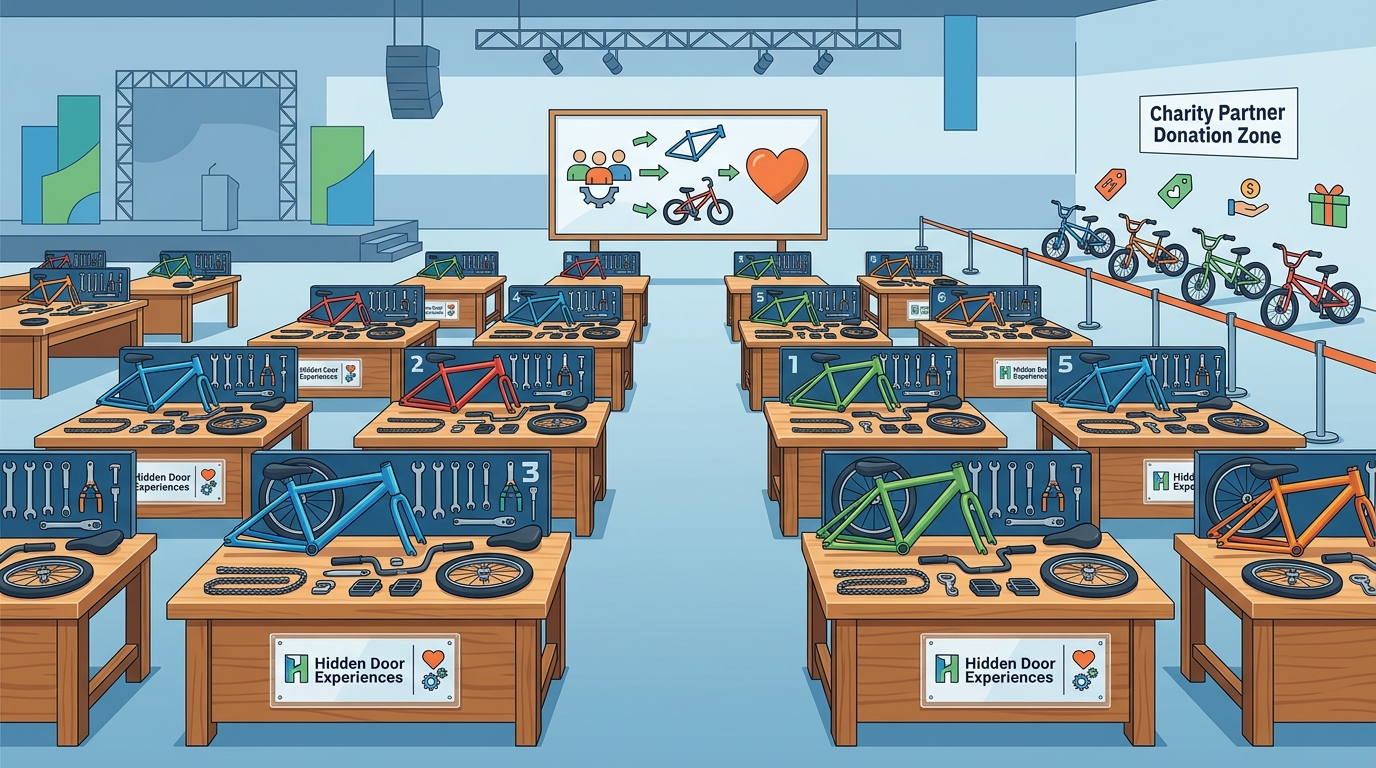
A bike build needs more space than a standard conference breakout. The ideal setup is a blank space with no fixed furniture, allowing room for bike stands, equipment, and team movement.
Indoor vs Outdoor
Bike builds work well both indoors and outdoors. Conference rooms, ballrooms, and warehouse-style venues are all suitable. If your conference venue has a large breakout space or loading dock area, that can work perfectly. For outdoor setups, ensure you have a weather contingency.
Space Requirements
Allow roughly 3 to 4 square metres per participant. For a group of 200, that means a minimum of 600 square metres. Your provider will bring bike stands, tools, spare parts, and challenge stations, so factor in setup time of 60 to 90 minutes before delegates arrive.
If you need help finding the right space, providers like Hidden Door Experiences can suggest venues that work well for this format across Sydney, Melbourne, and Brisbane.
Structuring the Experience for Large Groups
A conference energiser is a short, high-impact activity designed to re-engage delegates between sessions. A bike build can serve as a powerful energiser or a standalone session, depending on how you structure it.
Team Size and Format
Teams of 4 to 6 people work best. Each team is assigned a bike frame and competes in multiple rounds of challenges to earn parts and tools. This format encourages delegation, communication, and hands-on problem solving.
Timing
Most bike builds run between 90 minutes and 3 hours. For conferences, the sweet spot is a 2-hour session scheduled after lunch when energy is high and delegates are ready to move. Avoid squeezing it into the last 45 minutes of the day when attention has already dropped.
Hidden Door's Bikes 4 Tykes experience uses this challenge-based format, where teams battle through interactive rounds before assembling the bikes. It is one of the most successful charity team building experiences in Australia, having donated over 3,500 bikes to date.
Choosing the Right Charity Partner
The charity partnership is what elevates a bike build from a fun activity to a meaningful experience. Work with your provider to identify a charity that aligns with your organisation's values and, ideally, operates locally.
What to Look For
Choose a partner that can communicate the specific need, such as which bike sizes are required. Hidden Door Experiences partners with Weave in Sydney, where bikes are donated to assist families living throughout the city. Before each event, they discuss what sizes are needed to ensure there is an immediate, genuine need.
If your organisation has an existing charity relationship, most providers are happy to work with your chosen partner instead.
Safety, Quality Checks, and Mechanics
Safety is non-negotiable. Every bike built by participants must be inspected by a qualified mechanic before it reaches a child. A bike mechanic is a trained professional who checks frame integrity, brake function, wheel alignment, and component tightness.
Reputable providers include on-site mechanics as part of the package. After each event, the mechanic checks and repairs each bike thoroughly before transport to the charity for distribution. This ensures every bike is roadworthy and safe, regardless of the participants' mechanical experience.
If participants are not handy with tools, facilitators are on-site to guide every step. No prior mechanical skill is required.
Maximising Emotional Impact and CSR Outcomes
The most memorable moment of any bike build is the handover. Some providers arrange for children from the charity to attend and accept the bikes in person. If this is possible, keep it a surprise for the participants. The emotional impact of the reveal is consistently rated as the highlight of the event.
To conclude the experience, share photos and letters from previous recipients. This reinforces the real-world impact and gives delegates a sense of completion. As a follow-up, your charity partner can provide a letter of thanks along with photos from the day, which is valuable for internal communications and ESG reporting.
For organisations with ESG commitments, the documented social impact of a bike build provides visible, tangible evidence of purpose-driven team building that goes beyond a feel-good afternoon.
Key Takeaways
- A charity bike build combines team building, CSR, and conference engagement into a single high-impact session.
- Start planning at least 6 to 8 weeks in advance; 8 to 12 weeks for groups over 100.
- Teams of 4 to 6 work best. Use a challenge-based format to earn bike parts before building.
- Choose a venue with open floor space and allow 3 to 4 square metres per person.
- Always include an on-site bike mechanic for safety inspections before donation.
- Partner with a local charity and confirm specific needs such as bike sizes in advance.
- Keep the child handover a surprise if possible, as it creates the most powerful emotional moment.
Frequently Asked Questions
How many people can participate in a charity bike build?
Charity bike builds scale well. Providers like Hidden Door Experiences accommodate groups from 10 to 500 people, making them suitable for small team days through to large national conferences.
How long does a charity bike building event take?
Most events run between 90 minutes and 3 hours, depending on group size and format. A 2-hour session is the most common choice for conference settings.
Do participants need mechanical skills?
No. Facilitators guide every team through the build process, and a qualified bike mechanic inspects every completed bike. No prior experience is needed.
Can we choose which charity receives the bikes?
Yes. Most providers have established charity partners but are happy to work with your preferred organisation. Hidden Door partners with Weave in Sydney by default but welcomes alternative charity selections.
What venue works best for a bike build?
Any large open space works well. Conference breakout rooms, hotel ballrooms, warehouses, and outdoor areas are all suitable. The key requirement is enough clear floor space for teams, bike stands, and equipment.
Can a bike build be run outdoors?
Absolutely. Outdoor setups work well in good weather and add a relaxed feel to the event. Have a wet-weather backup plan in place.
What happens to the bikes after the event?
After the event, the on-site mechanic gives every bike a thorough inspection. The provider then transports the bikes to the charity partner for distribution to families in need.
How does a bike build support ESG reporting?
Providers can supply a full write-up of the social impact, including number of bikes donated, charity details, and event photography. This documentation supports corporate ESG and CSR reporting requirements.
Ready to Build Bikes at Your Next Conference?
If you are planning a corporate conference in Australia and want an activity that brings your team together while making a real difference, explore Bikes 4 Tykes from Hidden Door Experiences. With over 18 years of experience and 3,500+ bikes donated, they handle everything from planning to delivery so you can focus on your event. Get in touch with the team to start planning your charity bike build today.