
How to Organise a Charity Bike Building Event for a Large Corporate Conference
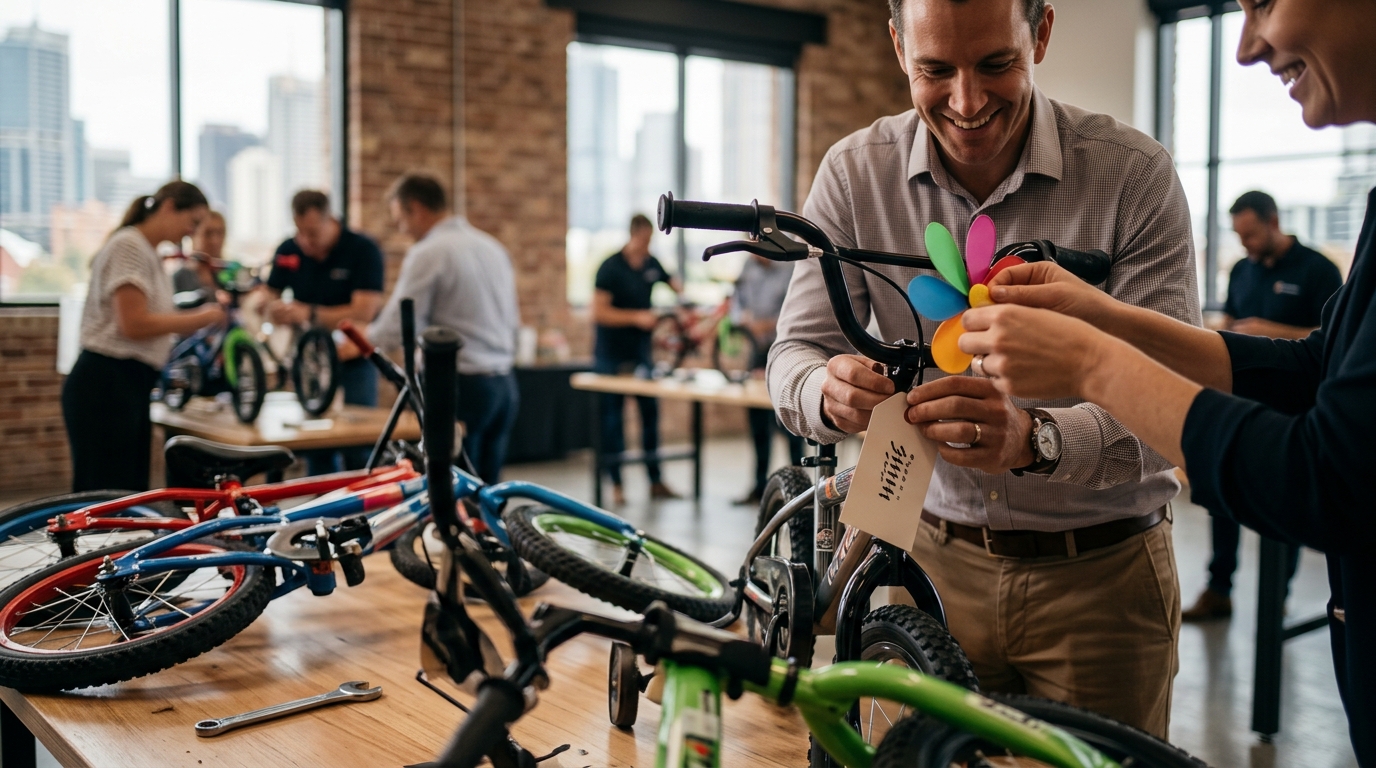
A charity bike building event is a corporate social responsibility (CSR) team building activity where conference delegates work in small teams to assemble children's bikes that are then donated to a local charity. It combines friendly competition, hands-on collaboration, and genuine community impact into a single conference session. With research showing that 79% of employees who participate in CSR activities report higher job satisfaction, charity bike builds have become one of the most requested formats for large-scale conferences across Australia. This guide walks you through every step, from planning logistics to maximising the emotional payoff on the day.
Why Charity Bike Builds Work at Conferences
Conference agendas are packed with presentations and breakout sessions, so the team building component needs to deliver energy, connection, and meaning in a compact window. A charity bike build ticks all three boxes. Teams compete in challenges to earn bike parts, then roll up their sleeves and physically build something together. The charitable element gives the activity a purpose that goes far beyond typical icebreakers.
According to Gallup's 2025 State of the Global Workplace report, global employee engagement has dropped to just 21%, costing businesses an estimated $438 billion in lost productivity. Purpose-driven activities like bike builds directly counter this trend by connecting employees to meaningful outcomes. Hidden Door Experiences has seen this firsthand, having donated over 3,500 bikes to charity through their Bikes 4 Tykes program over 15 years.
Planning Timeline and Key Milestones
A well-organised bike build requires advance planning, especially for large groups. Here is a recommended timeline:
| Timeframe Before Event | Action Item |
|---|---|
| 8-12 weeks | Confirm group size, book your team building provider and venue |
| 6-8 weeks | Finalise charity partner and confirm bike sizes needed |
| 4 weeks | Lock in conference run sheet and brief the AV team |
| 2 weeks | Confirm final headcount and team allocations |
| Event day | Provider sets up equipment; bikes checked by mechanic post-build |
For larger conferences, starting the planning process 9 to 12 weeks out ensures venue availability and smooth logistics. If your event involves travel or accommodation, allow even more lead time.
Budgeting Tips
Costs vary based on group size, location, and program complexity. As a general guide, team building activities in Australia typically range from $50 to $250 per person depending on the format. A bike build sits toward the higher end because it includes materials, equipment, and a qualified bike mechanic. Request a detailed quote that breaks down what is included so you can compare providers accurately.
Venue and Space Requirements
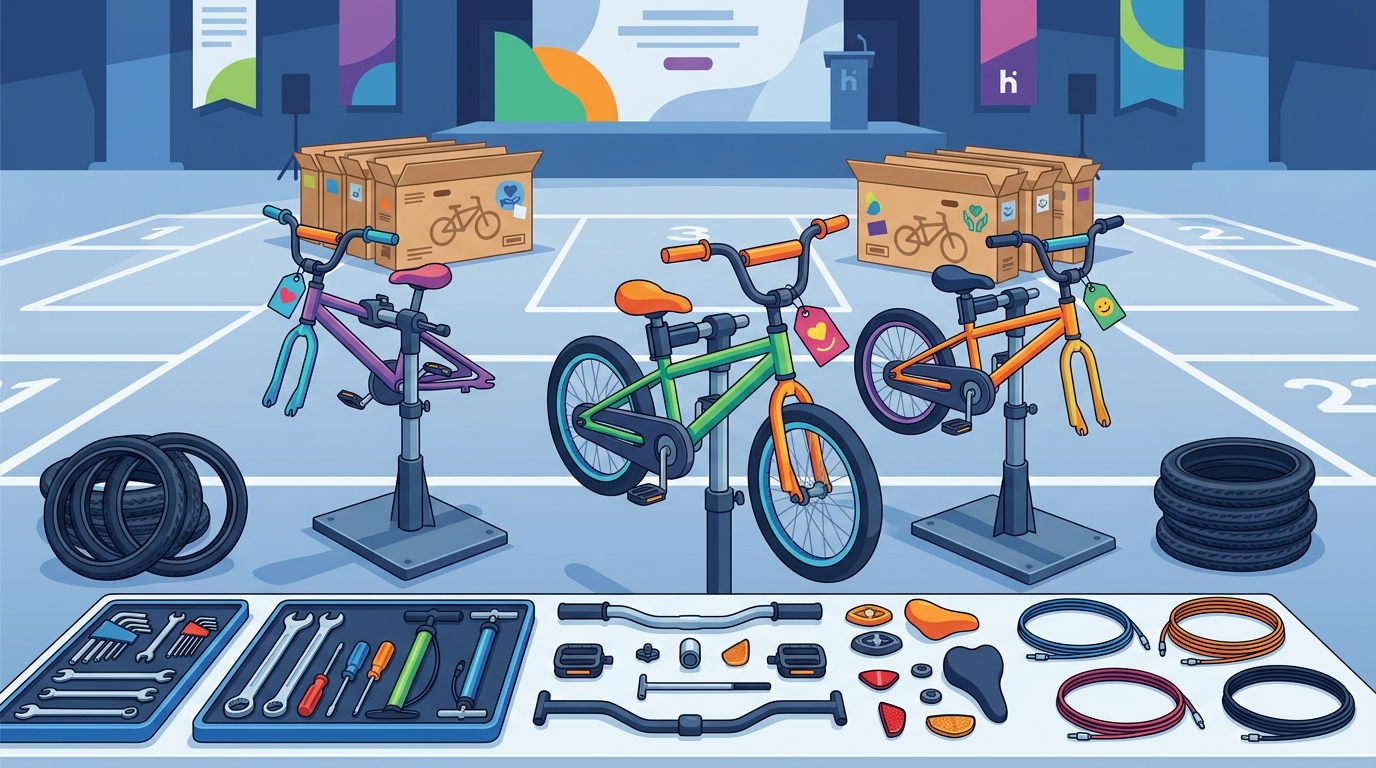
A bike build needs open floor space where teams can spread out with bike frames, tools, and parts. The ideal setup is a blank space with no fixed furniture, allowing the provider to bring in bike stands and equipment. Conference centres, hotel ballrooms, and outdoor areas all work well.
One advantage of bike builds is their flexibility. Build a Bike can be delivered outdoors, which is ideal for Australian conferences held at waterfront or parkland venues. If weather is a concern, most providers have wet-weather backup plans in place.
Indoor vs Outdoor Considerations
Indoor builds work best in venues with high ceilings, good ventilation, and easy load-in access. Outdoor builds add sunshine and energy but require a flat surface and shade options. Whichever you choose, confirm that the space allows for approximately 3 to 4 square metres per team of 4 to 6 people.
Team Structure and Group Sizes
A team size is the number of people assigned to build one bike together. The optimal team size for a bike build is 4 to 6 people. This ensures everyone has a role and stays actively engaged throughout the experience. For a conference of 200 delegates, you would need roughly 35 to 50 bikes.
Mixing teams across departments or business units is highly recommended. Collaboration-based team building activities are designed to bring people together around one shared goal, breaking down silos that form during day-to-day work. Random team allocation ensures delegates interact with colleagues they would not normally sit beside.
Choosing the Right Charity Partner
A charity partner is the organisation that will receive and distribute the finished bikes to children and families in need. Selecting the right partner adds authenticity and emotional impact to the event. The best providers coordinate directly with charities to confirm what size bikes are needed before each event.
In Sydney, Hidden Door partners with Weave, an organisation supporting families across the city. Before each event, they discuss sizing requirements to ensure immediate need. If your organisation has a preferred charity, most providers are happy to work with them instead.
Maximising the Emotional Impact
Consider arranging for a charity representative to attend the event and share the story of how the bikes will be used. Some providers also share photos and letters from previous recipients at the close of the session, which creates a powerful emotional conclusion to the activity.
Running the Event on the Day
A typical bike build runs between 1.5 and 3 hours and follows a proven structure. The first half features competitive challenges, often bike-themed trivia, physical mini-games, and problem-solving tasks, where teams earn points and advantages. The second half shifts into the actual build phase, where teams assemble their bikes against the clock.
The Role of Professional Facilitation
Professional facilitation is what separates a memorable conference activity from an awkward one. Experienced hosts drive energy, manage timing, and ensure every participant feels included. Hidden Door Experiences brings everything to you, including facilitators, equipment, tools, and a bike mechanic who inspects every single bike before it goes to its new owner.
Safety and Quality Assurance
Every bike should be checked by a qualified mechanic after assembly. This is non-negotiable. It protects the children receiving the bikes and gives participants confidence that their work has a real, safe outcome. Reputable providers handle this as a standard part of the event.
Key Takeaways
- Charity bike builds combine team building, CSR impact, and conference energy into a single 1.5 to 3 hour session.
- Optimal team sizes are 4 to 6 people per bike, ensuring active participation for all delegates.
- Start planning 8 to 12 weeks before your conference to secure venues, providers, and charity partners.
- Choose a provider with a qualified bike mechanic on site for post-build safety inspections.
- Partner with a local charity and coordinate bike sizes based on immediate community need.
- Professional facilitation is essential for maintaining energy and inclusivity across large groups.
- Purpose-driven activities drive measurably higher employee satisfaction and engagement than standard icebreakers.
Frequently Asked Questions
How long does a charity bike building event take?
Most charity bike builds run between 1.5 and 3 hours, including competitive challenges, the build itself, and a closing presentation. Shorter formats of around 90 minutes work well as conference breakouts.
How many people can participate in a single bike build event?
There is no strict upper limit. Events commonly range from 20 to 500 participants. Providers like Hidden Door have experience scaling activities for conferences of all sizes across Australia.
Do participants need mechanical skills to build a bike?
No. The activity is designed for all skill levels. Facilitators and bike mechanics are on site to guide teams through the process. If you cannot build IKEA furniture, you will still be fine.
What happens to the bikes after the event?
Every bike is inspected by a qualified mechanic, repaired if necessary, and then transported to the chosen charity partner for distribution to children and families in need.
Can we choose our own charity to receive the bikes?
Yes. Most providers have established charity partners but are happy to work with an organisation of your choice if you have a preferred cause.
Is a charity bike build suitable for an indoor conference venue?
Absolutely. Bike builds work well indoors or outdoors, provided the space is large enough for teams and bike frames to move around. Conference centres, ballrooms, and open office spaces are all suitable.
How much does a charity bike building event cost in Australia?
Pricing varies by group size, location, and program inclusions. As a guide, team building activities in Australia range from around $50 to $250 per person. Request a detailed quote from your provider to understand exactly what is included.
What is the best time in a conference agenda for a bike build?
After lunch is usually the sweet spot. Energy is high, delegates are ready to move, and the activity provides a strong contrast to seated presentation sessions.
Get Started With Your Bike Build
Ready to add a charity bike build to your next conference? Explore the Bikes 4 Tykes experience from Hidden Door Experiences and request a tailored quote for your group size and location. Their team will handle everything from equipment and facilitation to charity coordination, so you can focus on running a conference your delegates will actually remember.