
How to Organise a Charity Bike Building Event for a Large Corporate Conference
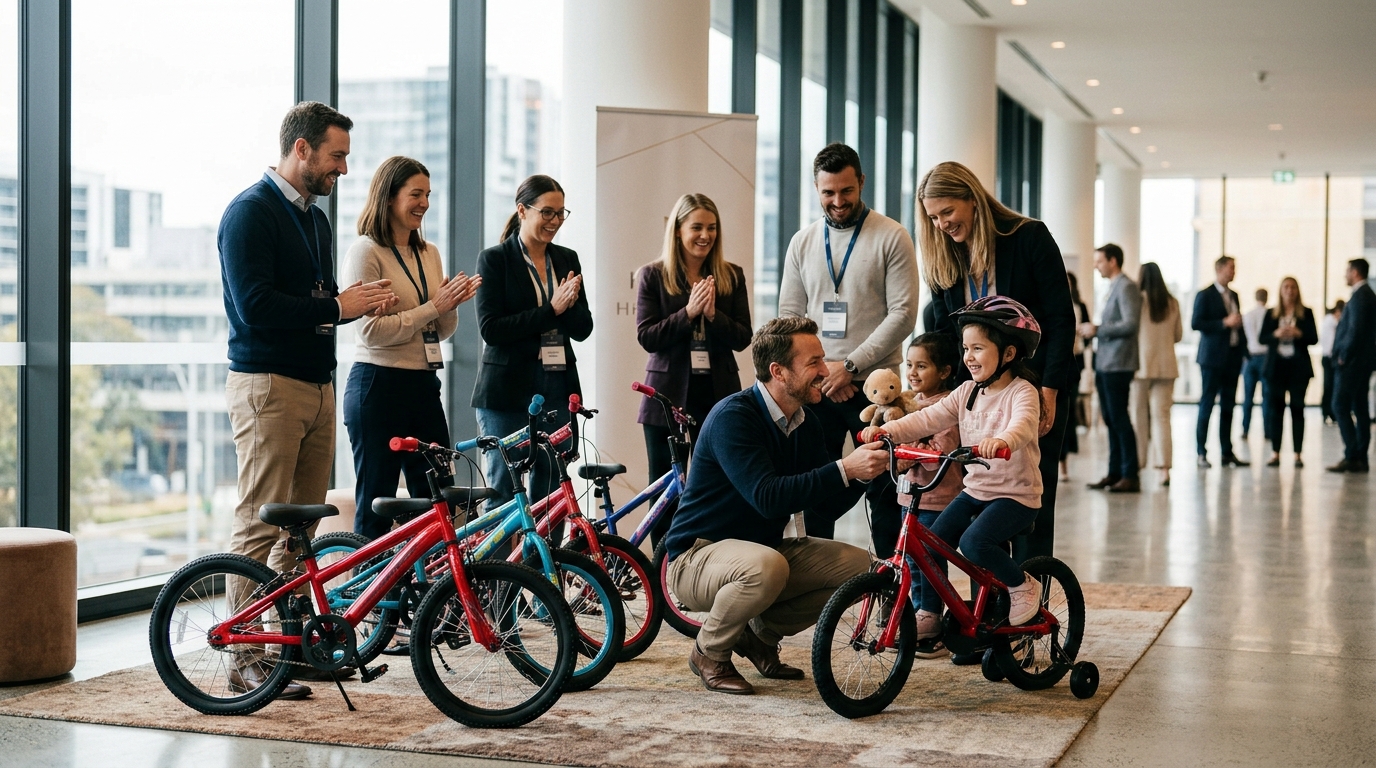
A charity bike building event is a corporate team building activity where participants work in small teams to complete challenges, earn bicycle parts, and assemble fully functional kids' bikes that are donated to a local charity. It is one of the most popular CSR-driven team experiences in Australia, combining friendly competition, hands-on collaboration, and genuine community impact into a single conference session. Whether you are planning for 30 people or 300-plus delegates, this guide walks you through every step, from setting objectives and choosing a provider to logistics on the day and measuring results afterwards.
Why Charity Bike Builds Work at Conferences
Conference agendas are packed with presentations and strategy sessions. Delegates need an experience that re-energises them while reinforcing the company's values. A charity bike build delivers on both fronts.
Research shows that companies with highly engaged teams see 21% more profit and 17% higher productivity. Embedding a CSR activity inside your conference agenda taps directly into that engagement lift. Participants connect with colleagues they would not normally interact with, solve problems under time pressure, and walk away knowing their effort made a tangible difference.
Providers like Hidden Door's Bikes 4 Tykes have donated over 3,500 bikes to charity across more than 15 years of events, proving the format scales reliably for large groups.
Step 1: Set Clear Objectives
Before booking anything, define what success looks like. A charity bike build can target multiple outcomes simultaneously, but clarity upfront shapes every decision that follows.
Common Objectives
- Team connection: Breaking down silos between departments or offices.
- CSR alignment: Demonstrating corporate values through action.
- Conference energy: Injecting a hands-on session into a day of presentations.
- Skill development: Practising communication, delegation, and creative problem-solving.
Share these objectives with your collaboration activity provider so they can tailor challenges, timing, and debrief content to your goals.
Step 2: Choose the Right Provider
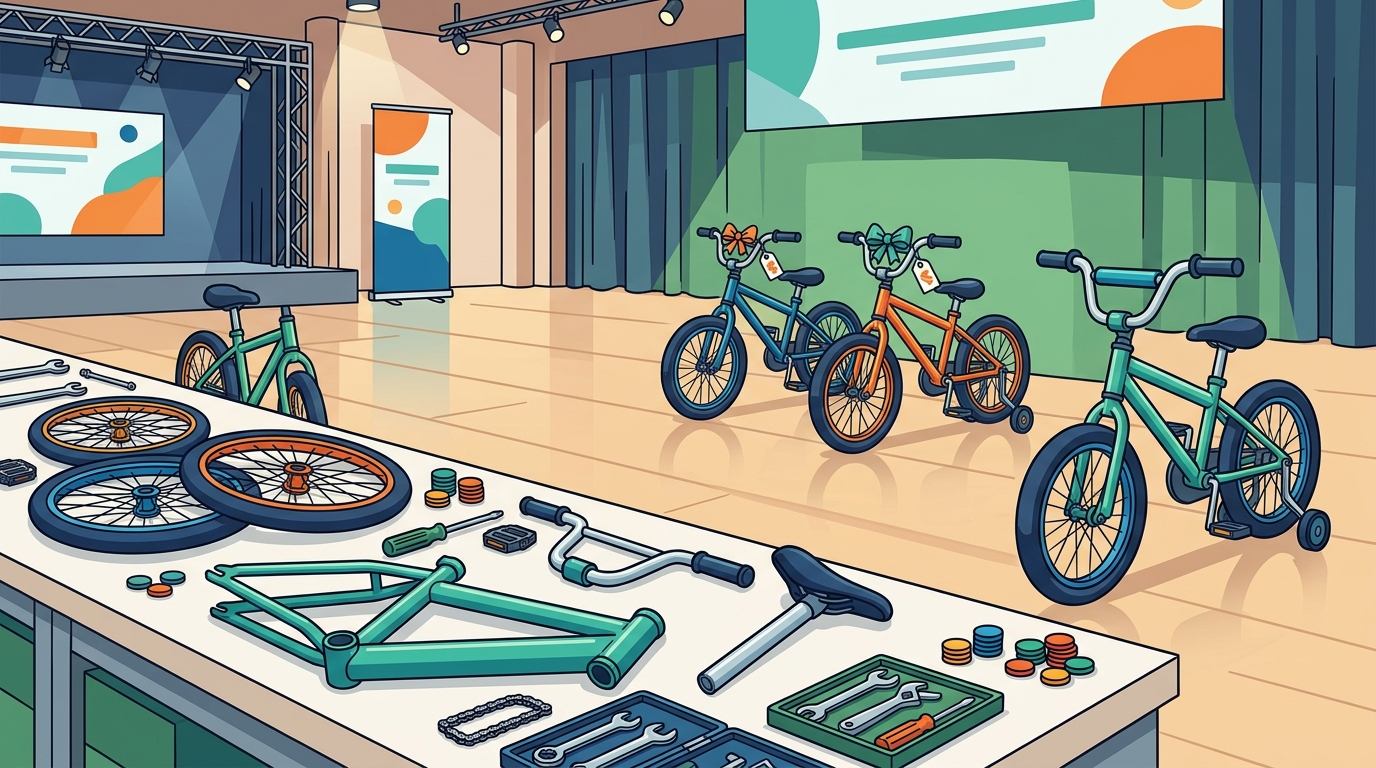
Not all team building companies can deliver a bike build at conference scale. The right provider handles everything from sourcing bike-shop-quality bicycles to having a qualified mechanic on site.
What to Look For
| Criteria | Why It Matters |
|---|---|
| Proven track record at scale | Experience with 100-plus delegates reduces risk significantly |
| Dedicated bike mechanic | Every bike must be safety-checked before donation |
| Established charity partnerships | Ensures bikes reach families with genuine need |
| Professional facilitation | A skilled host keeps energy high and timing on track |
| End-to-end logistics | Provider manages equipment, setup, pack-down, and delivery |
| Customisation options | Challenges and branding can be tailored to your conference theme |
Hidden Door Experiences, recognised as Australia's Best Team Building Company by Spice Magazine six years running, manages the full process including bike sourcing, mechanic checks, and charity coordination. Their team has delivered for organisations like Qantas, as documented in the Qantas Build a Bike case study.
Step 3: Plan Venue and Logistics
A bike build can run indoors or outdoors, but venue selection is critical for large groups. A blank, open space is the ideal setup so bike stands, tools, and equipment can be arranged with plenty of room for movement.
Space Requirements
As a general rule, allow approximately 25 square feet of open space per participant. Conference ballrooms, exhibition halls, outdoor courtyards, and even car parks work well. Hidden Door's indoor team building experiences are designed for exactly these settings.
Timing Within the Agenda
Position the bike build after lunch when energy is high and delegates are ready to move. Most charity bike builds run between 1.5 and 3 hours. For conferences, a 90-minute to two-hour slot is the sweet spot, leaving time for a meaningful reveal at the end.
If your event is in Sydney, Melbourne, or Brisbane, start planning at least 6 to 8 weeks ahead. For larger conferences with travel and accommodation, corporate event planning guides recommend beginning 9 to 12 months in advance.
Step 4: Structure the Event Agenda
The bike assembly is only part of the experience. The best charity bike builds follow a structured flow that maximises engagement from start to finish.
Typical Event Flow
- Team formation and icebreaker (10-15 min): Delegates split into teams of 4 to 6 and receive a bike frame.
- Challenge rounds (30-45 min): Teams compete in bike-themed trivia, physical mini-games, and problem-solving tasks to earn parts and tools.
- Bike build (30-40 min): Teams assemble their bikes using earned components. On-site facilitators assist those less confident with tools.
- Mechanic inspection (10 min): A qualified bike mechanic checks every bike for safety before it is cleared for donation.
- The big reveal (10-15 min): Photos and stories from previous recipients are shared. Where possible, charity representatives attend to accept bikes in person.
This structure ensures the experience is not just building, but a complete team journey that reinforces charity team building principles of purpose, collaboration, and community impact.
Step 5: Align With a Charity Partner
A charity partner is the organisation that receives the donated bikes and distributes them to families in need. Working with an established partner ensures the bikes go where they are needed most.
Hidden Door Experiences partners with Weave in Sydney, discussing bike sizes before each event to match seasonal demand. They are also happy to work with a charity of the client's choosing. After each event, the mechanic completes final checks and the bikes are transported directly to the charity for distribution.
A strong charity alignment adds emotional weight to the experience. According to a 2025 report from Ares Management, 79% of employees who participate in company volunteer programs report higher overall job satisfaction compared to 55% of those who do not.
Step 6: Measure Impact and Follow Up
The event does not end when the last bike rolls out the door. Measuring impact ensures the investment delivers lasting value.
Metrics to Track
- Number of bikes built and donated
- Participant satisfaction scores (post-event survey)
- Qualitative feedback and testimonials
- Social media reach from event photos and videos
- Follow-up thank-you letter and photos from the charity partner
Share results with leadership and across the organisation. This reinforces the company's values and builds momentum for future team building activities. Some organisations report an average return of US$4 for every $1 spent on team building, and companies with high employee engagement can be 21% more profitable.
Key Takeaways
- A charity bike build is a proven conference activity that combines teamwork, competition, and community impact.
- Define clear objectives before choosing a format or provider to ensure the event aligns with your conference goals.
- Choose a provider with a track record at scale, established charity partnerships, and on-site bike mechanics.
- Allow 25 square feet per person and schedule the activity after lunch for maximum energy.
- Structure the session in phases: icebreaker, challenge rounds, build, inspection, and reveal.
- Partner with a charity that has genuine, immediate need for the bikes being built.
- Measure and share results to demonstrate ROI and reinforce your company's CSR commitment.
Frequently Asked Questions
How many people can participate in a charity bike build?
Charity bike builds scale from small teams of 10 to conferences with hundreds of delegates. Teams of 4 to 6 people per bike is the standard format. Providers like Hidden Door Experiences have run events for groups ranging from 30 to over 400 participants.
How long does a conference bike build take?
Most charity bike builds run between 1.5 and 3 hours. For a conference breakout, a 90-minute to two-hour session works well, including challenge rounds, the build itself, and the donation reveal.
Do participants need mechanical experience?
No prior mechanical experience is required. Professional facilitators guide every team through the process, and a qualified bike mechanic is on site to assist and inspect each completed bike before it is donated.
Can a bike build be run indoors?
Yes. Charity bike builds work well in conference ballrooms, exhibition halls, and other large indoor spaces. The ideal setup is a blank, open space with no fixed furniture so teams have room to move around their bike stations.
What happens to the bikes after the event?
Every completed bike is inspected by a qualified mechanic, repaired if needed, and then transported to the designated charity partner. Teams typically receive a thank-you letter and photos from the charity after the event.
How much does a charity bike build cost?
Pricing varies by group size, location, and customisation. As a general guide for corporate team building in Australia, expect around $50 to $250 per person depending on the format and inclusions. Request a tailored quote from your provider for accurate pricing.
Can we choose our own charity partner?
Most providers are happy to work with a charity of your choice. Hidden Door Experiences partners with Weave in Sydney by default but welcomes client-nominated charities for bike donations.
Is this activity suitable for a large national conference?
Absolutely. Charity bike builds are one of the most scalable CSR team building formats available. They work for national conferences, multi-day offsites, and company-wide events across Sydney, Melbourne, Brisbane, and beyond.
Ready to Build Bikes at Your Next Conference?
Get in touch with the team at Hidden Door Experiences to discuss your group size, conference dates, and objectives. They will come back with a tailored proposal that fits your agenda and budget.