
How to Organise a Charity Bike Building Event for a Large Corporate Conference
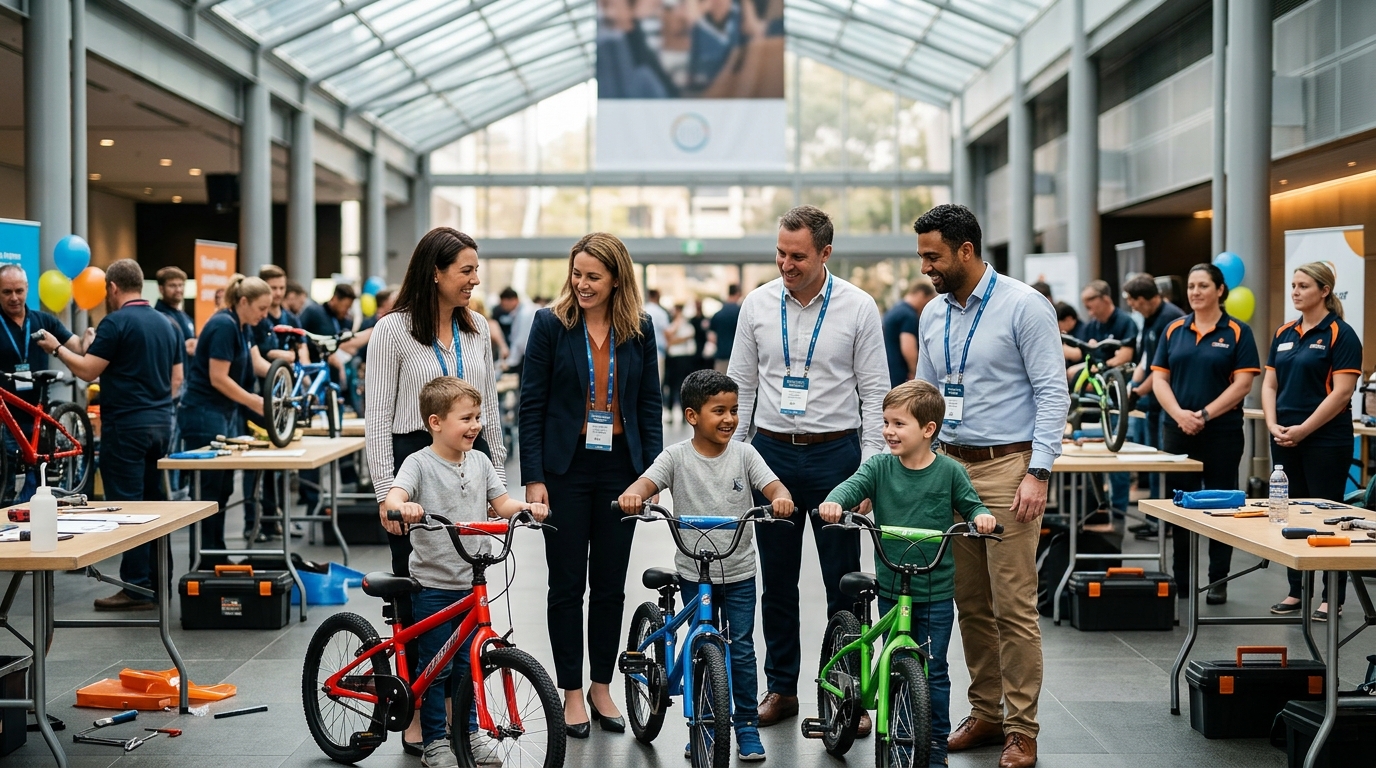
A charity bike building event is a team building activity where conference delegates work in small groups to assemble children's bicycles, which are then donated to a charity partner. It combines hands-on collaboration with corporate social responsibility (CSR), giving your conference agenda a purpose-driven highlight that people genuinely remember. Whether you are planning for 50 or 500 delegates, this guide walks you through every step, from selecting a provider to handing the finished bikes over to grateful families.
Why Charity Bike Builds Work at Conferences
Corporate conferences often pack the agenda with presentations, leaving little room for genuine human connection. A charity bike build breaks that pattern by shifting delegates from passive listeners to active collaborators. CSR is corporate social responsibility, a business framework in which companies manage operations to benefit society and the environment.
Bike builds naturally combine goal-setting, communication, friendly competition, collaboration and problem-solving into a single session. Research highlighted by Harvard Business Review shows that positive social interactions at work account for more than 50% of communication improvements, making CSR-based activities an excellent investment in team culture.
Purpose-driven activities also break down silos. When marketing works alongside engineering to assemble a bike, they build understanding, respect and lasting memories. Charity team building activities are designed to connect people with purpose and allow teams to give back while strengthening workplace bonds.
Planning Timeline and Key Milestones
Large conferences require coordination months in advance. Use the timeline below to stay on track.
| Timeframe | Milestone | Owner |
|---|---|---|
| 12-8 weeks out | Confirm event objectives, group size and budget | Event lead |
| 8-6 weeks out | Select and brief your team building provider | Event lead + provider |
| 6-4 weeks out | Lock in venue space, AV and catering requirements | Venue coordinator |
| 4-2 weeks out | Confirm charity partner and bike sizes needed | Provider + charity |
| 1 week out | Final run sheet, delegate numbers and team allocations | Event lead |
| Event day | Setup, facilitation, bike mechanic checks, donation handover | Provider |
Starting early ensures your provider can source the correct number and size of bikes. Providers like Hidden Door's Build a Bike discuss size requirements with their charity partner before each event to ensure there is an immediate need.
Choosing the Right Provider
Not all team building companies are equal. Look for a provider with a proven track record in large-scale conference delivery, dedicated facilitators and an established charity partnership network.
Track Record Matters
Hidden Door Experiences has delivered team building activities across Australia for over 18 years and has been named Australia's best team building company by Spice Magazine six years running. Their Bikes 4 Tykes program alone has resulted in over 3,500 bikes donated to charity, including builds for brands like Qantas.
End-to-End Management
The best providers handle everything from logistics to facilitation so you can focus on your delegates. Hidden Door's experienced team manages the full experience from start to finish, and their corporate events approach starts with a discovery call rather than a template.
Safety and Quality
Every completed bike should be inspected by a qualified bike mechanic before donation. This non-negotiable step ensures child safety and protects your organisation's reputation.
Event Format and Structure
A charity bike build is typically structured in two halves: competitive team challenges followed by the hands-on build. A team energiser is a short, high-energy activity designed to break the ice and raise group energy before the main event.
In the first half, teams of four to six people compete in themed challenges to earn points. These might include bike trivia, relay races or communication puzzles. Points translate into advantages (or disadvantages) when it comes time to build. This gamified structure keeps energy high and ensures even non-mechanical participants are fully engaged.
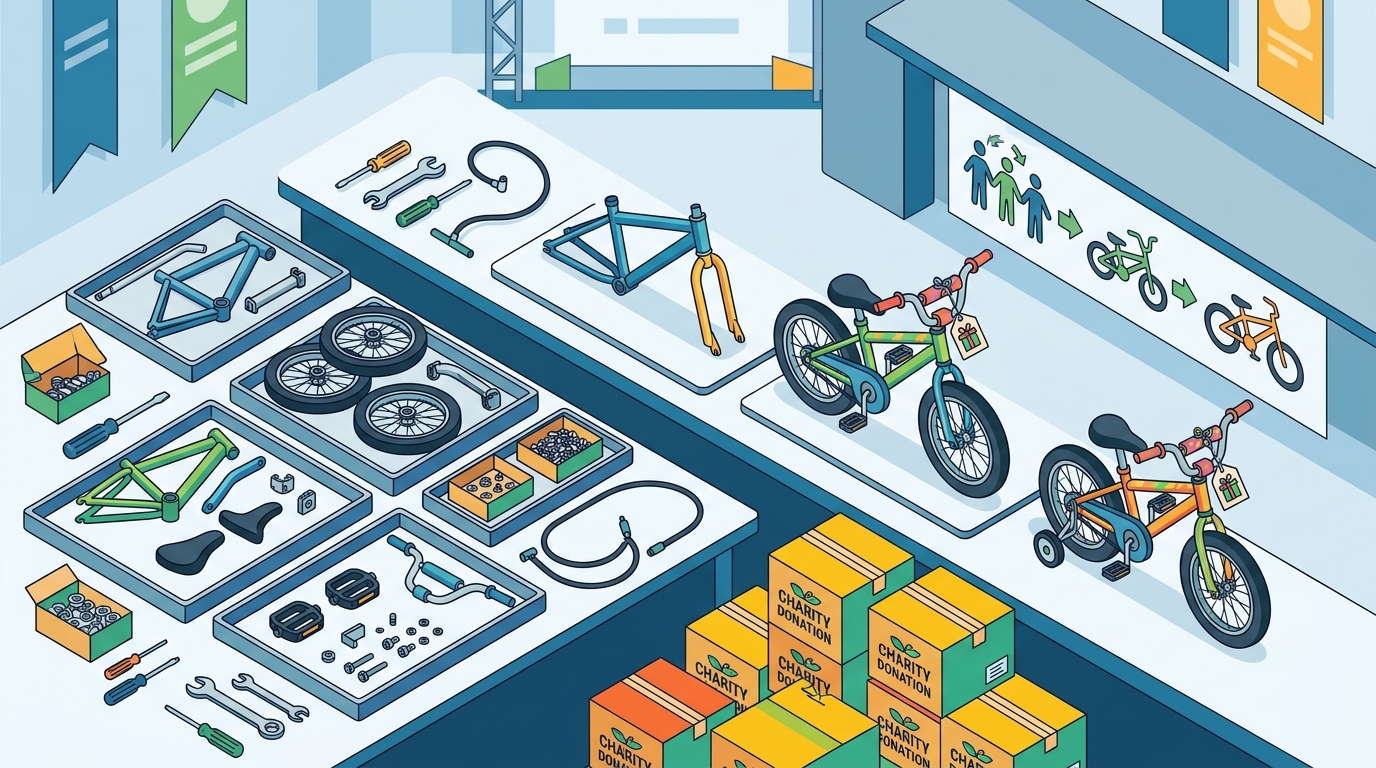
The final 30 minutes is where the hard work pays off. Teams use the bike parts they have earned to assemble a real children's bike. If you are running the event at a collaboration-focused conference, you can add a decorating element where teams personalise bikes with stickers, streamers and a handwritten card for the recipient.
Most charity bike builds run between 1.5 and 3 hours, making them ideal for an after-lunch conference slot when energy is high and people are ready to move.
Venue, Space and Logistics Essentials
Large group bike builds need adequate floor space. As a rule of thumb, allocate roughly 3 square metres per team of six, plus a central staging area for bike parts and tools. Conference ballrooms, hotel function rooms and outdoor courtyards all work well.
Your provider should bring all tools, bike frames, parts, safety equipment and branded materials. Good providers like Hidden Door bring everything to you, meaning less planning overhead and more engagement for your delegates. If you are considering an outdoor build, keep a wet-weather backup in mind as rain and mechanical parts do not mix well.
Indoor team building setups work especially well in conference venues across Sydney, Melbourne and Brisbane where AV infrastructure is already in place.
Selecting a Charity Partner
The emotional impact of a bike build peaks when there is a genuine connection to the receiving community. Work with your provider to identify a local charity that supports children or families in the area where your conference is being held.
In Sydney, Hidden Door partners with Weave, a community organisation supporting young people and families. Before each event, they discuss what size bikes are required to ensure there is an immediate need. If your organisation has a preferred charity, reputable providers are happy to coordinate directly.
Aligning the charity with your company values amplifies the storytelling opportunity. Post-event photos and videos of bikes being delivered create powerful internal communications content that reinforces your CSR commitment long after the conference ends.
Measuring Impact and ROI
Return on investment for a charity bike build goes beyond dollars. Track these metrics to demonstrate value to leadership:
- Participant satisfaction scores collected via post-event survey.
- Number of bikes built and donated as a tangible CSR output.
- Cross-department connections formed during the activity.
- Social media engagement from event photos and charity handover moments.
- Employee engagement lift measured in the next quarterly pulse survey.
Hands-on CSR activities transform corporate policy into shared purpose that drives engagement far more effectively than passive donation programs. The tangible nature of building something with your hands creates memories that sustain engagement well beyond the event day.
Key Takeaways
- A charity bike build combines team building, CSR and conference entertainment in a single 1.5 to 3 hour session.
- Start planning at least 8 to 12 weeks before your conference to lock in provider, venue and charity partner.
- Choose a provider with a proven track record, such as Hidden Door Experiences with over 3,500 bikes donated across 18+ years.
- Structure the event with competitive challenges in the first half and hands-on building in the second half.
- Every bike must be checked by a qualified mechanic before donation to ensure child safety.
- Partner with a local charity to maximise emotional impact and community connection.
- Measure ROI through satisfaction scores, bikes donated, cross-team connections and engagement metrics.
Frequently Asked Questions
What is a charity bike building event?
A charity bike building event is a team building activity where participants work in small teams to assemble children's bicycles that are then donated to a charitable organisation. It blends collaboration, problem-solving and social impact into one experience.
How many people can participate in a bike build?
Bike builds scale from small groups of 10 to large conferences of 500 or more. Teams are typically split into groups of four to six people, each assigned one bike to build.
Do participants need mechanical skills?
No mechanical experience is required. Providers supply all tools, step-by-step guidance and on-site support. A qualified bike mechanic checks every completed bike before it is donated.
How long does a charity bike build take?
Most charity bike builds run between 1.5 and 3 hours, including team challenges and the assembly phase. This makes them ideal for conference breakout sessions or post-lunch slots.
Can we choose which charity receives the bikes?
Yes. Reputable providers like Hidden Door Experiences are happy to work with your preferred charity, or they can connect you with their established charity partners.
How much does a charity bike build cost?
Costs vary based on group size, location and program duration. As a general guide, team building activities in Australia can range from $50 to $250 per person depending on the format and logistics involved.
Can a bike build be run indoors?
Absolutely. Many conference venues and hotel function rooms are well suited for indoor bike builds. Your provider will assess the space to ensure it meets safety requirements.
Where in Australia can we run a charity bike build?
Charity bike builds can be delivered across Australia, including Brisbane, Sydney, Melbourne, Canberra and regional locations. Providers with national facilitator networks offer the broadest coverage.
Ready to Plan Your Charity Bike Build?
Give your next conference a purpose-driven highlight that your delegates will talk about long after the event wraps. Explore the Build a Bike experience with Hidden Door Experiences and start planning a team building activity that builds bikes, builds teams and builds community impact across Australia.