
Best Way to Organize Charity Bike Building for Corporate Conferences
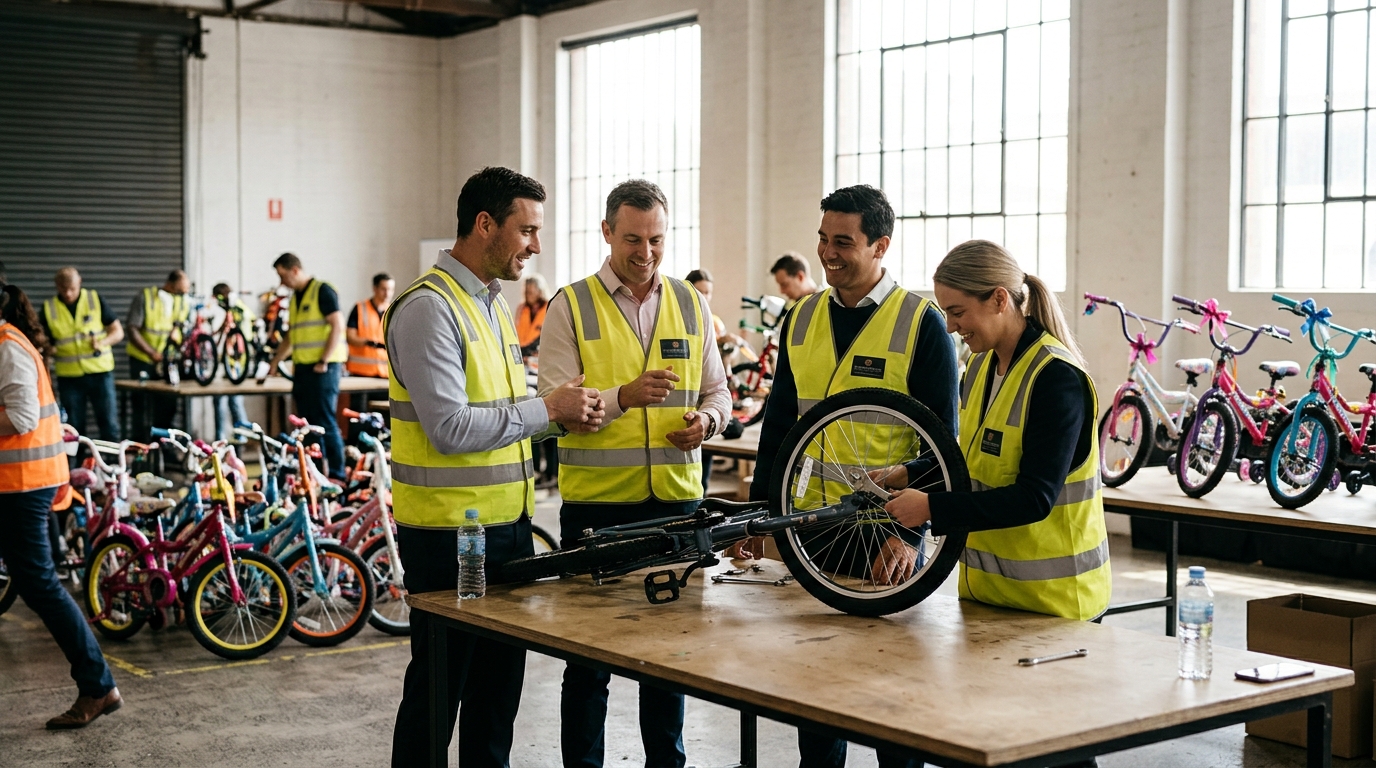
\nCharity bike building is a collaborative team building activity where corporate participants assemble bicycles to donate to children in need, effectively merging operational execution with social responsibility. This format allows large groups to contribute tangible value to their communities while reinforcing internal communication and shared purpose across diverse departments. Organizing such an event requires careful planning regarding venue logistics, safety protocols, and partnership alignment to ensure a seamless experience for hundreds of attendees. (Contact Us Hidden Door)
\n\nWhy Charity Bike Building Drives Conference Engagement
\nLarge corporate conferences often struggle with attendee fatigue and disconnected networking sessions. Integrating a charity team building component addresses these challenges by providing a meaningful focal point that transcends standard business objectives. Participants feel a stronger connection to the organization when their efforts yield visible social outcomes, such as delivering functional bicycles to underserved communities. This alignment of corporate values with actionable philanthropy significantly boosts morale and fosters a culture of collective responsibility.
\nTeam engagement is the degree of emotional commitment and active participation employees demonstrate toward organizational goals and peer interactions. Charity bike building directly enhances this metric by requiring cross-functional collaboration. Engineers, marketers, and executives must work together to assemble components, breaking down hierarchical barriers and encouraging organic communication. The shared goal of creating a gift for a child creates an emotional anchor that strengthens team bonds far beyond what traditional workshops achieve.
\nLogistics for Large Group Bike Events
\nExecuting a charity bike building event for a large audience demands precise spatial planning and resource management. The primary challenge involves managing the flow of hundreds of participants while maintaining safety standards and assembly quality. Successful events utilize a modular station setup where teams rotate through specific assembly phases, ensuring balanced workloads and preventing bottlenecks.
\nVenue Requirements
\nSelecting the appropriate venue is critical for large-scale operations. The space must accommodate high ceilings for storage, robust flooring for heavy equipment, and clear zoning for assembly, testing, and packaging areas. Hidden Door Experiences specializes in designing these environments to maximize throughput without compromising the participant experience. Bikes 4 Tykes is a flagship experience that has been refined to handle complex logistics, ensuring that even massive conferences can run smoothly.
\nStation Setup and Flow
\nEfficient station design relies on a linear workflow that mimics manufacturing principles while remaining accessible to non-technical staff. Each station focuses on a specific assembly task, such as wheel mounting, brake adjustment, or handlebar installation. Facilitators guide teams through each phase, providing tools and technical support as needed. This structure ensures that every bicycle meets safety standards before leaving the venue.
\n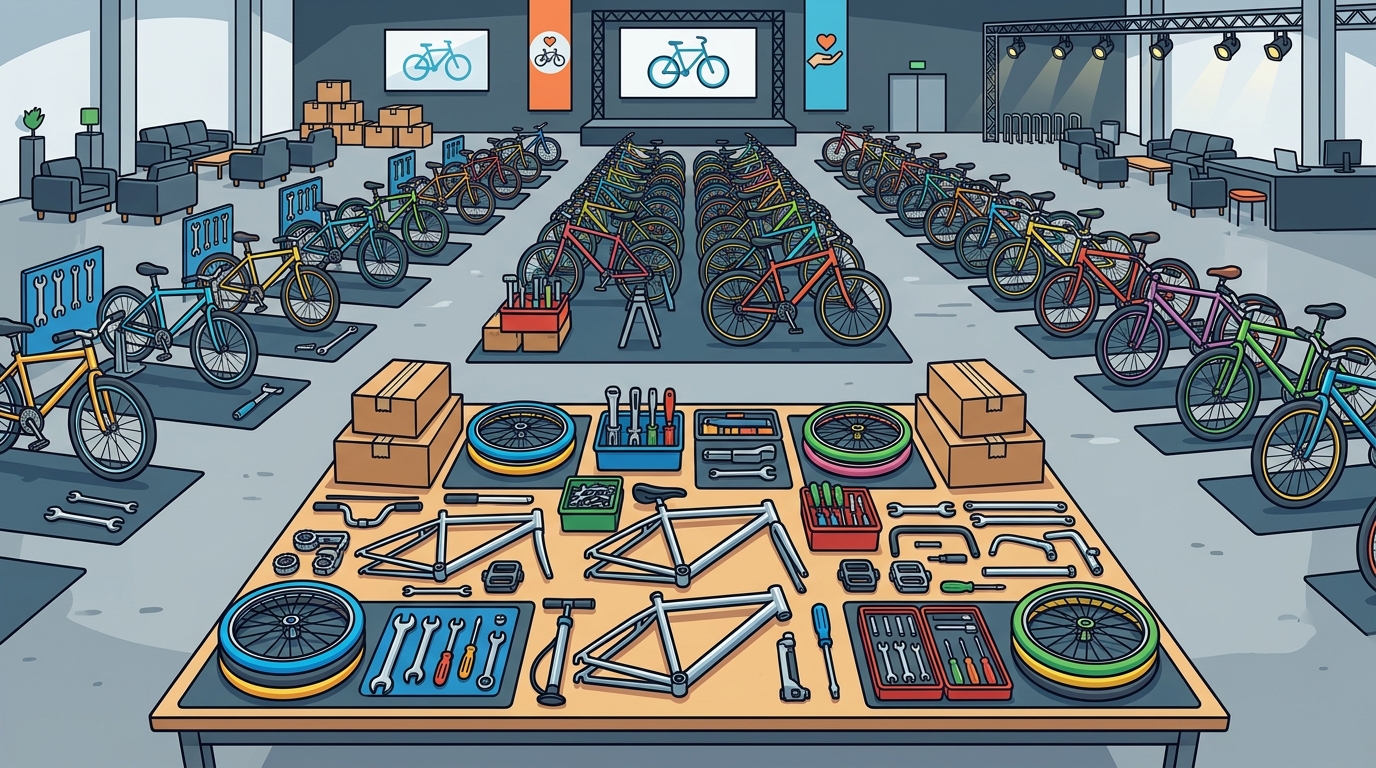
Maximizing Social Impact Through Corporate Partnerships
\nSocial impact is the measurable effect that an organization's actions have on community well-being and environmental sustainability. Corporate conferences provide a unique platform to amplify this impact by leveraging organizational resources and networks. Companies can partner with local charities, educational institutions, or non-profit organizations to ensure the donated bicycles reach those who need them most.
\nDonation Matching Strategies
\nOrganizations can enhance their social contribution by implementing donation matching programs. When employees contribute to the charity bike initiative, the company matches the financial support or provides additional resources, such as safety gear or maintenance kits. This approach doubles the value delivered to the community and reinforces the company's commitment to social responsibility. Corporate events that incorporate these strategies often see higher levels of employee pride and public recognition.
\nBrand Visibility and Reputation
\nParticipating in charity bike building enhances brand reputation by demonstrating a genuine commitment to community welfare. Companies can showcase their involvement through internal communications, press releases, and social media campaigns. Highlighting the number of bicycles assembled and the communities served strengthens the employer brand and attracts talent who prioritize purpose-driven work. Reviewing past successes through our work archives provides concrete examples of how these initiatives create lasting positive change.
\nManaging Risk and Compliance in Charity Activities
\nRisk management is essential when organizing hands-on activities involving tools and mechanical components. Corporate conferences must ensure that all safety protocols are strictly enforced to protect participants and maintain insurance coverage. This includes providing personal protective equipment, conducting safety briefings, and supervising tool usage at all times.
\nSafety Protocols and Insurance
\nComprehensive safety protocols include mandatory safety briefings, provision of gloves and eye protection, and clear signage for hazardous areas. Event organizers should verify that their insurance policies cover team building activities and that facilitators are trained in first aid. Hidden Door Experiences adheres to rigorous safety standards, ensuring that all events comply with local regulations and industry best practices.
\nEquipment Maintenance and Quality Control
\nQuality control processes ensure that every assembled bicycle is safe and functional before donation. This involves systematic testing of brakes, gears, and tires by trained facilitators. Companies can also involve participants in the testing phase to reinforce learning and accountability. Implementing a final quality check station prevents defects and ensures that donated bicycles are reliable for their recipients.
\nMeasuring ROI and Employee Satisfaction Post-Event
\nMeasuring return on investment for charity events requires tracking both quantitative metrics and qualitative feedback. Organizations should assess employee satisfaction through post-event surveys, analyzing responses regarding engagement, learning, and perceived value. Additionally, tracking long-term retention rates and employee advocacy can provide insights into the lasting impact of the initiative.
\nFeedback Mechanisms and Surveys
\nEffective feedback mechanisms include digital surveys distributed immediately after the event, focusing on specific aspects such as facilitation quality, logistical clarity, and emotional impact. Companies can also conduct focus groups to gather deeper insights into participant experiences. Analyzing this data helps refine future events and demonstrates accountability to stakeholders. (Host an Event)
\nLong-Term Retention and Culture
\nThe long-term value of charity bike building lies in its ability to shape organizational culture. Employees who participate in meaningful initiatives often report higher job satisfaction and a stronger sense of belonging. Companies can sustain this momentum by integrating charity components into regular operations, such as annual giving campaigns or ongoing community partnerships. Contact us to discuss how to embed these values into your ongoing strategy. (Organizing a Large)
\nKey Takeaways
\n- \n
- Charity bike building combines team collaboration with social philanthropy, creating high-impact experiences for large corporate conferences. \n
- Bikes 4 Tykes is a specialized experience designed to handle complex logistics while delivering functional bicycles to children in need. (Our History Our) \n
- Large conferences benefit from modular station setups that balance workflow efficiency with participant engagement and safety. \n
- Hidden Door Experiences operates across Australia, providing tailored solutions for corporate events, team building, and charity initiatives. \n
- Integrating donation matching and brand visibility strategies amplifies the social impact and enhances corporate reputation. \n
- Rigorous safety protocols and quality control measures ensure participant well-being and the reliability of donated bicycles. \n
- Measuring ROI through feedback mechanisms and long-term retention analysis validates the value of charity team building investments. \n
Frequently Asked Questions
\nWhat is the ideal group size for a charity bike building event?
\nCharity bike building events can accommodate groups ranging from small teams to large conferences with hundreds of participants. The scalability depends on the venue size and the number of assembly stations deployed. Hidden Door Experiences designs modular setups to ensure optimal flow and engagement regardless of group size.
\nHow long does a typical charity bike building session last?
\nA standard session lasts between two and four hours, allowing sufficient time for assembly, testing, and packaging. The duration can be adjusted based on conference schedules and the complexity of the bicycles being assembled. Facilitators manage the timeline to ensure all objectives are met without rushing participants.
\nCan charity bike building be adapted for hybrid or virtual teams?
\nYes, charity bike building can be adapted for hybrid environments by combining on-site assembly with virtual participation elements. Remote teams can contribute through fundraising, design input, or digital engagement activities that complement the physical event. This approach ensures inclusivity and maintains team cohesion across distributed locations.
\nWhat types of bicycles are assembled during these events?
\nEvents typically focus on assembling standard children's bicycles, which are donated to local charities or community organizations. The bikes are selected for their durability and ease of assembly, ensuring they are safe and functional for young riders. Hidden Door Experiences sources high-quality components to guarantee reliability.
\nHow does Hidden Door Experiences ensure safety during assembly?
\nSafety is prioritized through comprehensive protocols, including mandatory briefings, provision of protective equipment, and continuous facilitator supervision. All tools are managed carefully, and quality control checks verify that each bicycle meets safety standards before donation. These measures protect participants and ensure the integrity of the final product.
\nCan companies customize the charity aspect of the event?
\nCompanies can customize the charity component by selecting specific beneficiary organizations or focusing on particular community needs. Hidden Door Experiences works with clients to align the event with their corporate social responsibility goals, ensuring maximum relevance and impact. This flexibility allows organizations to create meaningful connections with their communities.
\nWhat is the process for booking a charity bike building event?
\nBooking begins with a consultation to discuss objectives, group size, and logistical requirements. Hidden Door Experiences provides a detailed proposal outlining the event structure, pricing, and customization options. Clients can then confirm their booking and collaborate with the team to finalize details, ensuring a seamless and successful event.
\nBook Your Charity Event
\nTransform your next corporate conference into a meaningful experience that drives engagement and delivers social value. Hidden Door Experiences offers expert facilitation, seamless logistics, and tailored solutions to bring your charity bike building vision to life. Contact us today to schedule a consultation and discover how we can create an impactful event for your team.
\n