
Organizations seeking to boost workplace cohesion frequently debate which activity delivers superior results. Recent workplace engagement data indicates that structured interactive events improve cross-departmental communication by nearly forty percent within the first quarter. Companies that prioritize immersive experiences consistently report higher employee retention rates and stronger cultural alignment. Understanding the operational differences between indoor competitive formats and location-based urban missions remains essential for event planners. This analysis evaluates both approaches to help your organization select the optimal framework for long-term team development. (Hidden Door Experiences Australia)
Understanding Modern Team Engagement Needs
Corporate game shows are structured competitive events where teams answer trivia, solve puzzles, and complete physical challenges under timed conditions. Outdoor city scavenger hunts are location-based collaborative missions where participants navigate urban environments to complete specific tasks and collect digital or physical clues. Team bonding is the intentional process of building interpersonal trust and shared purpose among organizational members. Modern workplaces require activities that break down hierarchical barriers while encouraging rapid decision-making. Organizations must align their chosen format with existing communication workflows and cultural objectives.
The Mechanics of Corporate Game Shows
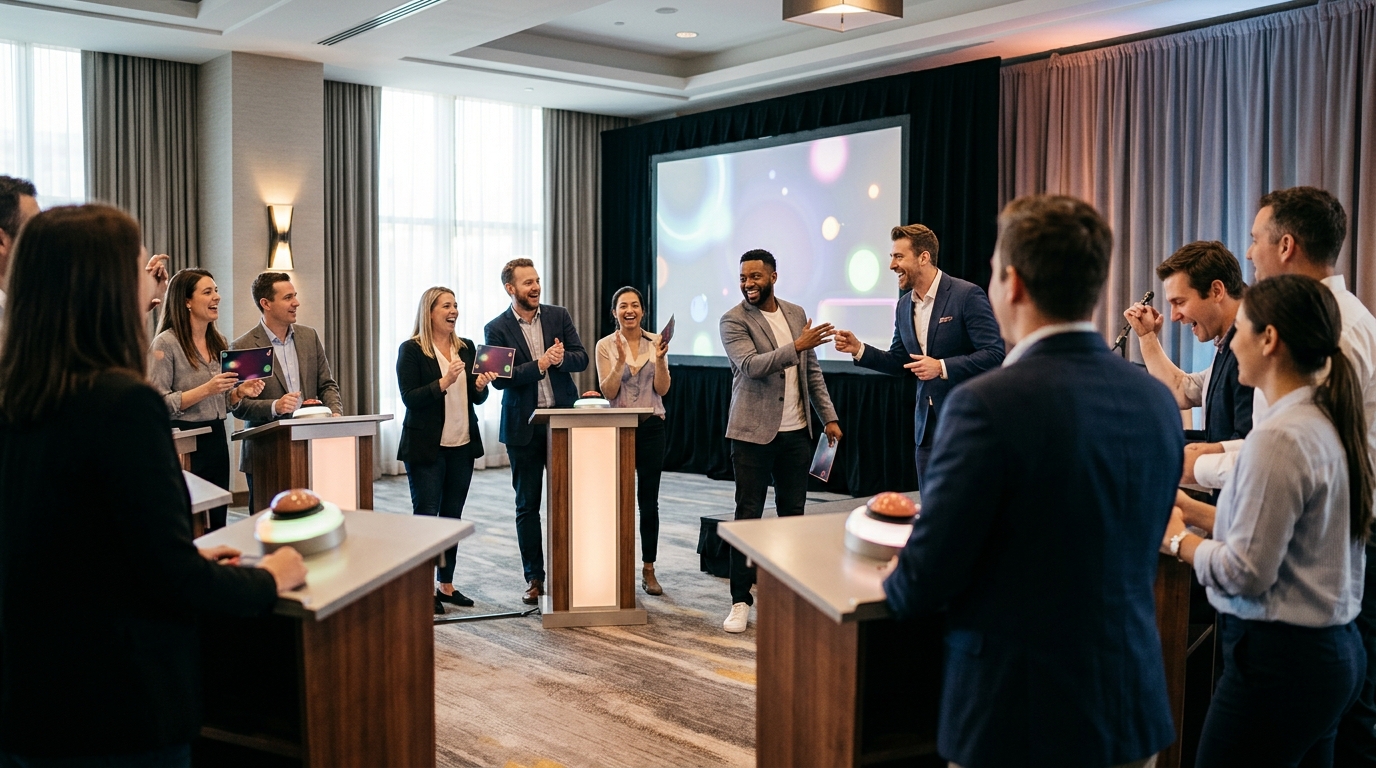
Indoor competitive formats thrive on controlled environments and predictable pacing. Facilitators guide participants through rotating stations that test knowledge, creativity, and quick thinking. Teams rotate through trivia rounds, physical challenges, and collaborative puzzles. This structure minimizes logistical friction and maximizes face-to-face interaction. Hidden Door Experiences designs these programs to accommodate groups ranging from twenty to five hundred participants. The format works exceptionally well for hybrid teams that require a centralized gathering point. Internal facilitators manage scoring, provide real-time feedback, and adjust difficulty levels to maintain engagement. Companies seeking predictable outcomes and minimal travel requirements typically select this approach. Corporate game shows deliver consistent results across diverse industry sectors.
The Dynamics of Outdoor City Scavenger Hunts
Location-based urban missions require participants to navigate public spaces while solving sequential clues. Teams utilize mobile applications or printed clue packets to locate landmarks, photograph specific objects, and complete physical tasks. This format naturally forces cross-functional collaboration because members must delegate navigation, research, and execution roles. Urban environments provide authentic backdrops that stimulate conversation and spontaneous problem-solving. Organizations operating in metropolitan hubs frequently choose this model to showcase local culture while building resilience. The unpredictable nature of outdoor navigation teaches adaptability and resource management. Outdoor city scavenger hunts consistently rank among the most requested team building activities for forward-thinking enterprises.
Operational Logistics and Venue Requirements
Event planners must evaluate space availability, accessibility, and budget constraints before selecting a format. Indoor game shows require climate-controlled venues with reliable power sources and flexible seating arrangements. Popular corporate event venues like The Rook or Harbour View Hotel provide ideal infrastructure for large-scale competitions. Outdoor scavenger hunts demand comprehensive route mapping, permit verification, and weather contingency planning. Both formats benefit from professional facilitation that handles registration, equipment distribution, and safety monitoring. Hidden Door Experiences manages these operational details to ensure seamless execution. Corporate retreats often integrate either format as a core component of multi-day agendas.
Measuring Return on Investment for Both Formats
Organizations evaluate success through participation rates, post-event survey scores, and behavioral changes in daily workflows. Workplace collaboration research demonstrates that immersive activities generate measurable improvements in cross-departmental trust. Companies that implement regular interactive programming report twenty percent faster project turnaround times. Internal facilitators track engagement metrics and provide post-event debriefs that translate activity insights into actionable workplace strategies. Decision-makers should compare total program costs against expected productivity gains and cultural alignment improvements. Custom event planning ensures that every activity aligns with specific organizational KPIs.
Key Takeaways
- Corporate game shows deliver controlled, predictable environments ideal for large hybrid teams.
- Outdoor city scavenger hunts require urban navigation skills and foster spontaneous collaboration.
- Indoor formats minimize logistical friction while maximizing face-to-face interaction.
- Location-based missions naturally teach adaptability and resource management under pressure.
- Professional facilitation handles registration, scoring, and safety monitoring for both models.
- Organizations should align activity selection with existing communication workflows and cultural objectives.
- Both formats integrate seamlessly into multi-day corporate retreat agendas.
Frequently Asked Questions
Which format works best for remote teams transitioning to in-person gatherings?
Corporate game shows typically provide a more structured environment that helps remote employees acclimate quickly. The controlled pacing reduces social friction while encouraging participation across all skill levels.
How many participants can each activity safely accommodate?
Both formats scale efficiently from twenty to five hundred attendees. Professional facilitators adjust team sizes and station rotations to maintain engagement without compromising safety.
Do outdoor scavenger hunts require special permits or insurance?
Professional organizers handle all municipal permit applications and liability coverage. Participants simply follow designated routes while adhering to standard urban safety guidelines.
Can these activities be customized to reflect specific company values?
Every program incorporates branded trivia, custom puzzles, and tailored scoring metrics. Facilitators align content with organizational mission statements and strategic priorities.
What happens if weather conditions disrupt an outdoor urban mission?
Organizers maintain comprehensive backup plans that convert outdoor routes into indoor alternatives. Participants experience equivalent challenge levels without compromising safety or engagement.
How long do these corporate events typically last?
Standard programs run between two and four hours depending on group size and complexity. Extended corporate retreats often combine multiple activities into comprehensive multi-day agendas.
Which format generates higher employee satisfaction scores?
Satisfaction metrics depend entirely on team demographics and existing communication styles. Organizations that prioritize structured interaction prefer indoor competitions, while those seeking adventure favor urban missions.
Book Your Next Corporate Experience
Selecting the right team building format requires careful evaluation of your organizational goals, group size, and cultural priorities. Hidden Door Experiences designs every program to deliver measurable engagement, seamless logistics, and lasting cultural impact. Contact our event planning team today to schedule a consultation and secure your preferred date. Request a custom proposal and transform your next corporate gathering into a catalyst for sustained workplace performance.
| Feature | Corporate Game Shows | Outdoor City Scavenger Hunts |
|---|---|---|
| Environment | Climate-controlled indoor venues | Urban public spaces and landmarks |
| Primary Skill Focus | Trivia, quick thinking, collaboration | Navigational strategy, adaptability, resource management |
| Logistical Complexity | Low to moderate | Moderate to high |
| Team Size Capacity | 20 to 500 participants (Sample size how) | 20 to 500 participants |
| Weather Dependency | None | Requires contingency planning |
| Ideal Use Case | Hybrid teams, large conferences, predictable outcomes | Metropolitan hubs, adventure-seeking cultures, adaptability training |