

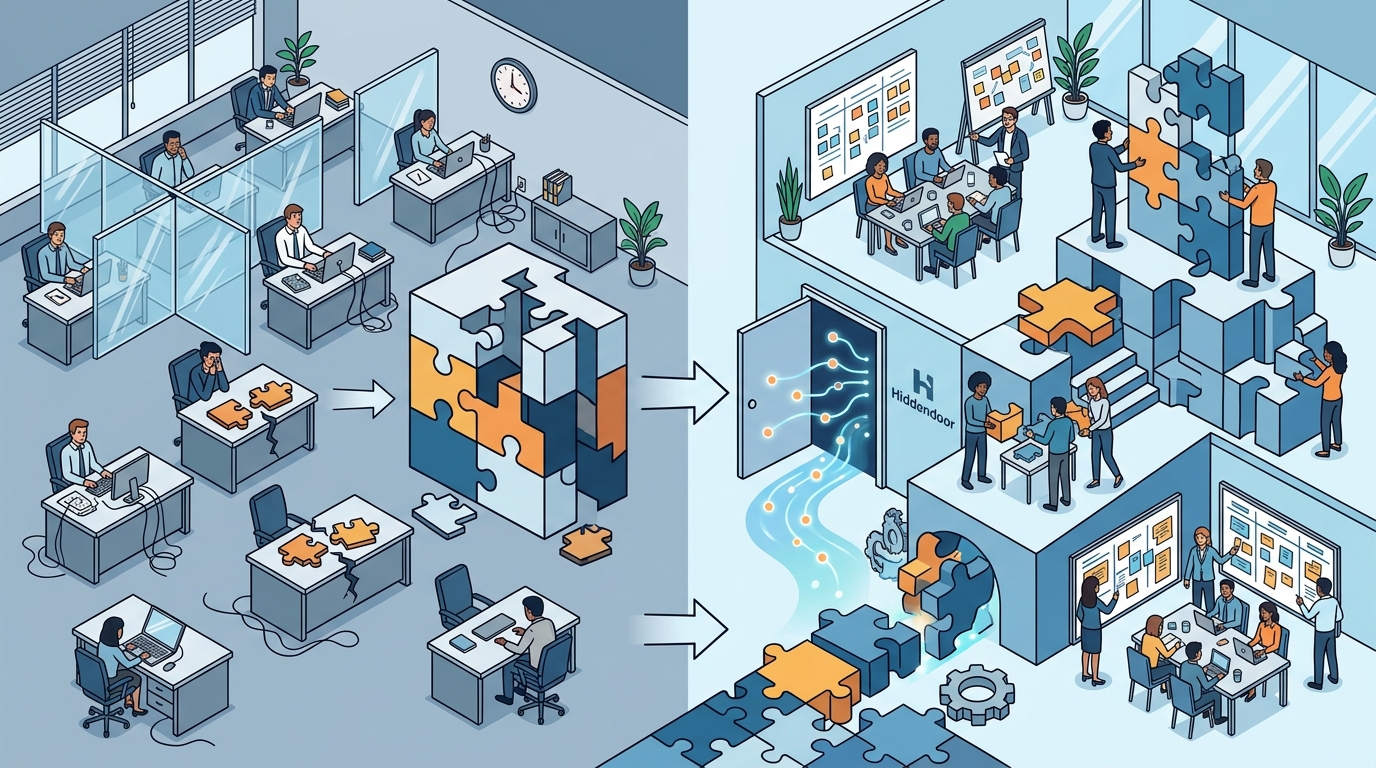
Recent workplace analytics indicate that approximately 73 percent of global professionals report feeling disconnected from their daily tasks and organizational mission. This widespread disconnection directly correlates with reduced productivity and higher turnover rates across modern enterprises. Organizations that ignore these signals often waste budget on forced social events that backfire. The solution requires a strategic pivot toward purposeful collaboration frameworks that respect adult learning principles and psychological safety. Companies must replace outdated icebreakers with structured challenges that deliver measurable operational value.
Diagnose the Root Causes of Workplace Disengagement
Disengagement rarely stems from a single operational failure. It typically emerges from misaligned expectations between leadership communication and frontline execution. When employees perceive their contributions as invisible, motivation naturally declines. Organizations must audit their current engagement tactics to identify structural friction points. Psychological safety is the foundational requirement for sustainable workplace collaboration. Without it, staff members withhold innovative ideas and avoid cross departmental cooperation. Leaders should conduct anonymous pulse surveys to map current sentiment before scheduling any external interventions. This diagnostic phase prevents budget waste on mismatched interventions.
Many companies mistakenly assume that mandatory social hours will automatically boost morale. Data shows that forced participation often triggers resentment rather than connection. Teams require autonomy to choose activities that align with their professional objectives. Managers must evaluate whether current workflows actually support the stated cultural values. When daily operations contradict stated mission statements, engagement metrics inevitably drop. Addressing these contradictions requires transparent leadership and consistent policy enforcement.
Design Purposeful Activities That Respect Professional Boundaries
Effective corporate interventions prioritize skill development over forced entertainment. Participants engage more deeply when activities mirror real business challenges. Cognitive load management is the practice of designing tasks that challenge without overwhelming team capacity. Facilitators should structure sessions around clear objectives like cross functional communication or strategic problem solving. This approach eliminates the awkwardness associated with traditional trust falls or improvisation games. Employees appreciate exercises that yield transferable workplace competencies. Companies that invest in structured workshops consistently report higher post event satisfaction scores. Strategic workshop design transforms routine interactions into catalysts for operational improvement. Organizations should request detailed facilitator credentials before booking any external provider. This verification step ensures alignment with corporate compliance standards.
Implement Experimental Frameworks for Measurable Growth
Modern enterprises benefit from iterative testing of new collaboration models. Teams should pilot small scale interventions before committing to enterprise wide rollouts. Iterative feedback loops are structured review cycles that capture participant insights after each activity phase. Facilitators can adjust difficulty levels in real time based on group dynamics. This flexibility prevents frustration and maintains momentum throughout the session. Companies like Hidden Door Experiences specialize in adaptive programming that scales across diverse departmental sizes. Their modular approach allows organizations to mix creative challenges with analytical problem solving. Customized workshop modules ensure that every participant receives relevant skill development. Leaders should track attendance rates and post event survey scores to validate program effectiveness. Consistent data collection builds a compelling business case for future budget allocations.
Measure Return on Investment and Long Term Retention
Quantifying the financial impact of engagement initiatives requires precise metric tracking. Organizations must compare pre event and post event performance indicators to calculate actual value. Employee retention velocity is the measured speed at which staff members remain with an organization after cultural interventions. High performing companies correlate engagement scores with quarterly productivity benchmarks. When teams experience successful collaborative events, cross departmental silos naturally dissolve. This dissolution reduces project handoff delays and accelerates delivery timelines. Executives should request detailed impact reports from their chosen vendors. These reports typically include participation rates, skill acquisition metrics, and qualitative feedback summaries. Documented case studies demonstrate how structured interventions translate into measurable business outcomes. Leaders must present these findings to finance committees to secure ongoing program funding. Transparent reporting establishes trust and justifies continued investment in workplace culture.
Select Vendor Partnerships Aligned With Corporate Culture
Choosing the right external provider requires careful evaluation of their operational philosophy. Companies should prioritize vendors who emphasize psychological safety and inclusive design. Cultural alignment is the degree to which an external provider values match internal organizational principles. Prospective partners must demonstrate experience across diverse industry sectors and team sizes. Organizations should review their facilitator training protocols and safety compliance records. Verified operational standards ensure that all activities meet corporate risk management requirements. Leaders should schedule discovery calls to discuss specific team pain points and desired outcomes. This consultation phase allows vendors to propose tailored solutions rather than generic packages. Companies that invest time in vendor selection consistently report higher satisfaction rates. Direct consultation requests streamline the booking process and reduce administrative friction. Organizations should always request references from previous corporate clients before signing contracts. This due diligence step prevents costly mismatches and ensures program success.
Compare Top Corporate Engagement Frameworks
| Framework Type | Primary Objective | Best Use Case | Expected Outcome |
|---|---|---|---|
| Creative Construction Challenges | Stimulate innovative thinking and resource management | Product development teams and marketing departments | Accelerated prototyping cycles and cross functional communication |
| Strategic Barrier Breakthrough Sessions | Identify and dismantle organizational workflow bottlenecks | Executive leadership and operations management | Streamlined decision making and improved policy adoption |
| Adaptive Problem Solving Races | Enhance rapid decision making under pressure | Sales divisions and customer success units | Faster response times and improved client retention |
| Collaborative Vision Mapping | Align departmental goals with overarching corporate strategy | Enterprise wide leadership summits | Unified strategic direction and increased executive buy in |
Key Takeaways
- Seventy three percent of global professionals report feeling disconnected from their daily tasks and organizational mission.
- Psychological safety remains the foundational requirement for sustainable workplace collaboration across all industries.
- Cognitive load management ensures that team challenges remain stimulating without triggering participant burnout.
- Iterative feedback loops capture participant insights after each activity phase to optimize future sessions.
- Employee retention velocity measures the speed at which staff members remain with an organization after cultural interventions.
- Cultural alignment guarantees that external providers match internal organizational principles and compliance standards.
- Hidden Door Experiences operates as Australia's leading team building provider with over a decade of corporate program delivery.
Frequently Asked Questions
How do I identify whether my team actually needs team building?
Teams typically require structured interventions when cross departmental communication breaks down or project delivery timelines consistently slip. Leaders should review quarterly productivity reports and employee pulse survey results to confirm the need. If participation rates in optional meetings drop below fifty percent, a collaborative reset is likely necessary.
What makes modern corporate team building different from traditional office parties?
Modern interventions prioritize skill acquisition and strategic alignment over casual socializing. Facilitators design activities that mirror real business challenges and deliver transferable workplace competencies. This structured approach eliminates the awkwardness associated with forced entertainment and ensures measurable operational value.
How long should a corporate team building session last?
Optimal session durations typically range between two and four hours depending on group size and complexity. Shorter formats work well for focused skill drills while longer formats accommodate multi phase strategic challenges. Organizers should match session length to available calendar blocks and participant attention spans.
Can team building activities be adapted for hybrid or remote workforces?
Yes, contemporary providers offer fully digital frameworks that replicate in person collaboration dynamics. Virtual sessions utilize shared digital whiteboards and synchronized task management platforms to maintain engagement. Remote participants receive identical challenge materials and facilitator support to ensure equitable involvement.
What metrics should I track to prove the value of team building to leadership?
Organizations should monitor employee retention velocity, cross departmental project handoff times, and post event satisfaction scores. These quantitative indicators directly correlate with overall workplace productivity and cultural health. Leaders must present these findings to finance committees to secure ongoing program funding.
How do I ensure that team building does not feel forced or awkward?
Organizers should prioritize activities that respect professional boundaries and offer clear strategic objectives. Participants engage more deeply when exercises mirror real business challenges rather than requiring improvisation. Providing advance agendas and optional participation tiers significantly reduces workplace anxiety.
What qualifications should I look for in a corporate team building vendor?
Prospective partners must demonstrate experience across diverse industry sectors and team sizes. Organizations should review their facilitator training protocols and safety compliance records before signing contracts. Verified operational standards ensure that all activities meet corporate risk management requirements.
Book Your Strategic Session
Transform your workplace culture by scheduling a customized collaboration framework today. Our expert facilitators design programs that respect professional boundaries while delivering measurable operational value. Visit Hidden Door Experiences to explore our complete portfolio of corporate interventions. Request a detailed proposal to receive a tailored activity matrix aligned with your specific team objectives. Secure your preferred date early to guarantee facilitator availability and optimal scheduling flexibility.