

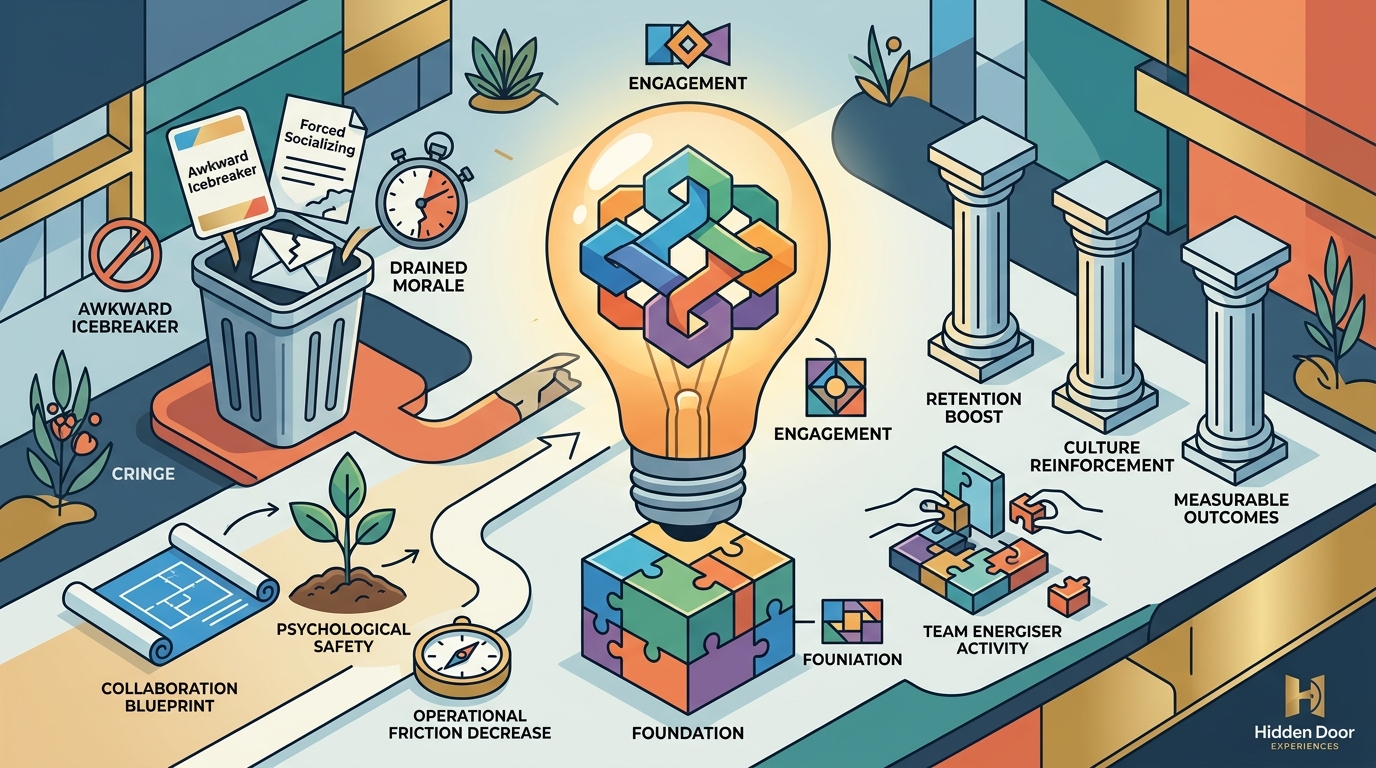
Recent workplace data shows that average engagement levels have plateaued across multiple industries, prompting leaders to rethink traditional interventions. Organizations frequently revert to forced socializing or awkward icebreakers that drain morale rather than restore it. The modern workforce demands authenticity, psychological safety, and measurable outcomes from every corporate initiative. When teams experience genuine connection through purposeful activities, retention improves and operational friction decreases. This guide outlines a proven framework to replace outdated rituals with high-impact experiences that respect professional boundaries while delivering tangible business value. (Hidden Door Experiences Australia)
Diagnose the Root Cause of Disengagement
Disengagement rarely stems from a single event. It accumulates through misaligned expectations, unclear communication channels, and repetitive operational routines. Leaders must first audit current team dynamics before purchasing any external program. A structured diagnostic phase reveals whether the issue involves leadership visibility, cross-departmental silos, or burnout from unsustainable workloads. Addressing these foundational elements ensures that subsequent interventions target actual friction points rather than superficial symptoms.
Team building is a structured intervention designed to improve interpersonal dynamics, clarify roles, and strengthen collaborative output across functional units. When organizations skip the diagnostic phase, they waste budget on activities that fail to address systemic workflow breakdowns. Prioritizing honest feedback loops and anonymous pulse surveys creates a baseline for measuring progress. This data-driven approach prevents leaders from guessing what their teams actually need.
Reject Cringe Activities and Forced Fun
Forced fun creates psychological resistance rather than genuine connection. Employees recognize when activities prioritize entertainment over professional development. The modern workplace rewards authenticity, transparency, and respect for individual working styles. Leaders must eliminate activities that require excessive physical exposure, awkward role-playing, or mandatory vulnerability without proper context. Replacing these outdated rituals with skill-based challenges restores trust and reduces workplace friction.
Corporate team building is a strategic investment focused on aligning individual strengths with organizational objectives while fostering sustainable collaboration. When programs respect professional boundaries, participation shifts from reluctant compliance to active ownership. Teams begin to view shared challenges as opportunities for growth rather than mandatory obligations. This cultural shift directly correlates with higher retention rates and improved cross-functional communication.
Design Purposeful Experiences That Align With Goals
Every successful intervention begins with a clearly defined experience goal. Leaders should map desired outcomes to specific team behaviors before selecting an activity. Whether the objective involves improving communication, boosting collaboration, or energizing staff before a major launch, the design must mirror real-world workflows. Programs that integrate problem-solving, creative pitching, or strategic planning deliver immediate transferable skills to daily operations.
Workshops and interactive keynotes provide structured frameworks for breaking through performance barriers and unlocking hidden potential. These sessions combine psychological insights with actionable strategies, ensuring participants leave with concrete tools rather than vague inspiration. When teams practice active listening and constructive feedback during guided exercises, they replicate those behaviors in boardrooms and project pipelines. This alignment between activity and application eliminates the disconnect between event day and Monday morning.
Measure ROI and Long-Term Outcomes
Tracking post-event metrics separates high-performing programs from forgettable distractions. Organizations should monitor participation rates, project delivery speeds, and employee satisfaction scores over a ninety-day window. Consistent improvements in cross-team handoffs and reduced meeting durations signal successful cultural integration. Leaders who establish clear KPIs before the event can accurately calculate the financial impact of improved collaboration.
Data shows that average retention improvements follow structured interventions when organizations maintain consistent follow-up protocols. Companies that schedule quarterly check-ins and reinforce workshop principles experience compounding returns on their initial investment. This longitudinal approach transforms one-time events into sustained cultural catalysts. Measuring outcomes objectively validates the program and secures future budget approvals.
Select the Right Format and Delivery Model
Delivery models must match team geography, technical infrastructure, and cultural preferences. Hybrid delivery models are synchronized environments that integrate physical and digital participation to support distributed workforces. Indoor sessions offer controlled environments for focused strategy work, while outdoor formats leverage natural settings to reduce hierarchical barriers. Virtual programs utilize digital whiteboards and breakout rooms to maintain interaction across time zones.
| Format Type | Best Use Case | Key Operational Benefit |
|---|---|---|
| Indoor Team Building | Strategy alignment and focused problem solving | Controlled environment with minimal logistical friction |
| Outdoor Team Building | Breaking hierarchical barriers and boosting energy | Natural settings reduce office distractions and stress |
| Virtual Team Building | Distributed teams and remote collaboration | Seamless integration across time zones and locations |
| Evening Activities | Relaxed networking and relationship building | Informal settings encourage authentic conversation |
Key Takeaways
- Australia's leading team building provider has facilitated over five thousand corporate interventions since inception.
- Programs featuring creative challenges and strategic pitching consistently deliver higher post-event application rates.
- Interactive keynotes focusing on mindset shifts and barrier removal show measurable improvements in leadership visibility.
- Hybrid delivery models accommodate distributed workforces without compromising interaction quality or engagement depth.
- Quarterly reinforcement protocols transform single events into sustained cultural catalysts with compounding ROI.
- Clear experience goals mapped to specific team behaviors prevent budget waste and ensure operational alignment.
Frequently Asked Questions
How do you determine if an activity will actually improve daily workflows?
Program designers map specific activity mechanics to documented team friction points before planning begins. Participants practice targeted skills like active listening, rapid prototyping, or conflict resolution during the session. Post-event managers track project handoff speeds and meeting efficiency to verify skill transfer. This diagnostic alignment ensures activities directly address operational bottlenecks rather than providing generic entertainment.
What is the typical duration for a high-impact corporate intervention?
Most successful programs range between two and four hours to maintain cognitive focus without causing fatigue. Shorter sessions fail to establish meaningful connections, while extended formats trigger diminishing returns. Organizers can schedule half-day workshops or full-day retreats depending on strategic objectives and team size. Flexible scheduling allows leaders to integrate interventions without disrupting critical business cycles.
Can remote teams participate effectively in physical activities?
Hybrid delivery models synchronize physical and digital environments to include distributed participants. Remote staff join via secure video links and interact through shared digital workspaces and collaborative platforms. Facilitators design tasks that require equal input from both on-site and remote members. This balanced approach prevents isolation and ensures all contributors influence final outcomes.
How do you measure the financial return on team building investments?
Organizations track ninety-day metrics including project delivery timelines, cross-departmental handoff accuracy, and employee retention rates. Leaders compare these figures against pre-event baselines to calculate efficiency gains. Reduced meeting durations and fewer communication errors directly translate to operational cost savings. Transparent reporting validates the program and secures future budget allocations.
What types of creative challenges deliver the strongest skill transfer?
Activities requiring rapid prototyping, strategic pitching, and resource allocation consistently produce measurable workflow improvements. Teams practice prioritizing constraints, iterating on feedback, and presenting solutions under time pressure. These mechanics mirror real-world project management cycles and executive presentations. Participants leave with refined communication habits and stronger collaborative confidence.
Is there a minimum team size required for successful program delivery?
Most interventions accommodate groups ranging from ten to two hundred participants without sacrificing interaction quality. Facilitators adjust group sizes and activity complexity to match organizational maturity and strategic goals. Smaller teams benefit from intensive coaching and detailed feedback loops. Larger groups utilize breakout formats to maintain engagement and ensure equitable participation across all subunits.
How quickly do organizations typically see cultural shifts after an event?
Initial behavioral changes emerge within the first thirty days when leaders reinforce workshop principles consistently. Sustained cultural transformation requires quarterly check-ins and ongoing integration of new communication protocols. Organizations that schedule follow-up sessions experience compounding improvements in trust and operational efficiency. Longitudinal tracking confirms that consistent reinforcement converts short-term energy into lasting structural change.
Book Your Experience
Transform your workplace culture with interventions designed for modern professionals. Our team builds custom programs that respect boundaries, deliver measurable outcomes, and eliminate outdated rituals. Contact our planning team today to schedule a diagnostic consultation and secure your next high-impact corporate initiative. Visit hiddendoor.com.au to explore our complete portfolio of indoor, outdoor, and virtual solutions tailored to your exact operational requirements.