

Planning a high-impact leadership retreat in tropical Queensland requires balancing strategic objectives with logistical precision. According to recent corporate travel data, organizations that invest in off-site strategic planning see a 23% increase in team alignment and decision-making speed compared to those who rely solely on office-based meetings. This statistic highlights the critical need for professional facilitation when moving leadership teams out of their daily operational environments. The choice between Cairns and Port Douglas is not merely geographical; it dictates the tone, accessibility, and potential activities for your executive group. (Hidden Door Experiences Australia)
Define Retreat Objectives and Outcomes
Before booking venues or flights, you must establish the core purpose of the retreat. A leadership retreat is not a vacation. It is a structured intervention designed to solve specific business challenges. Strategic alignment is the process of ensuring that all leadership team members share a common understanding of the company's goals and priorities. Without this clarity, the retreat risks becoming a series of disconnected conversations that yield no actionable results.
Begin by identifying the primary pain points. Is the team struggling with communication silos? Are they facing a market disruption that requires a new strategic direction? Or is the goal simply to rebuild trust after a period of high turnover? Document these objectives clearly. When you define the desired outcomes, you create a benchmark against which the retreat's success can be measured. This clarity also helps in selecting the right facilitators who specialize in those specific areas of organizational development.
Consider the duration of the retreat. For deep strategic work, a two-day format is often insufficient. A three-day structure allows for a natural flow: Day one focuses on breaking down barriers and setting the stage. Day two is dedicated to intense strategic work and problem-solving. Day three is reserved for action planning and commitment setting. This pacing prevents cognitive overload and ensures that leadership teams leave with a clear roadmap rather than just a list of ideas.
Choose Between Cairns and Port Douglas
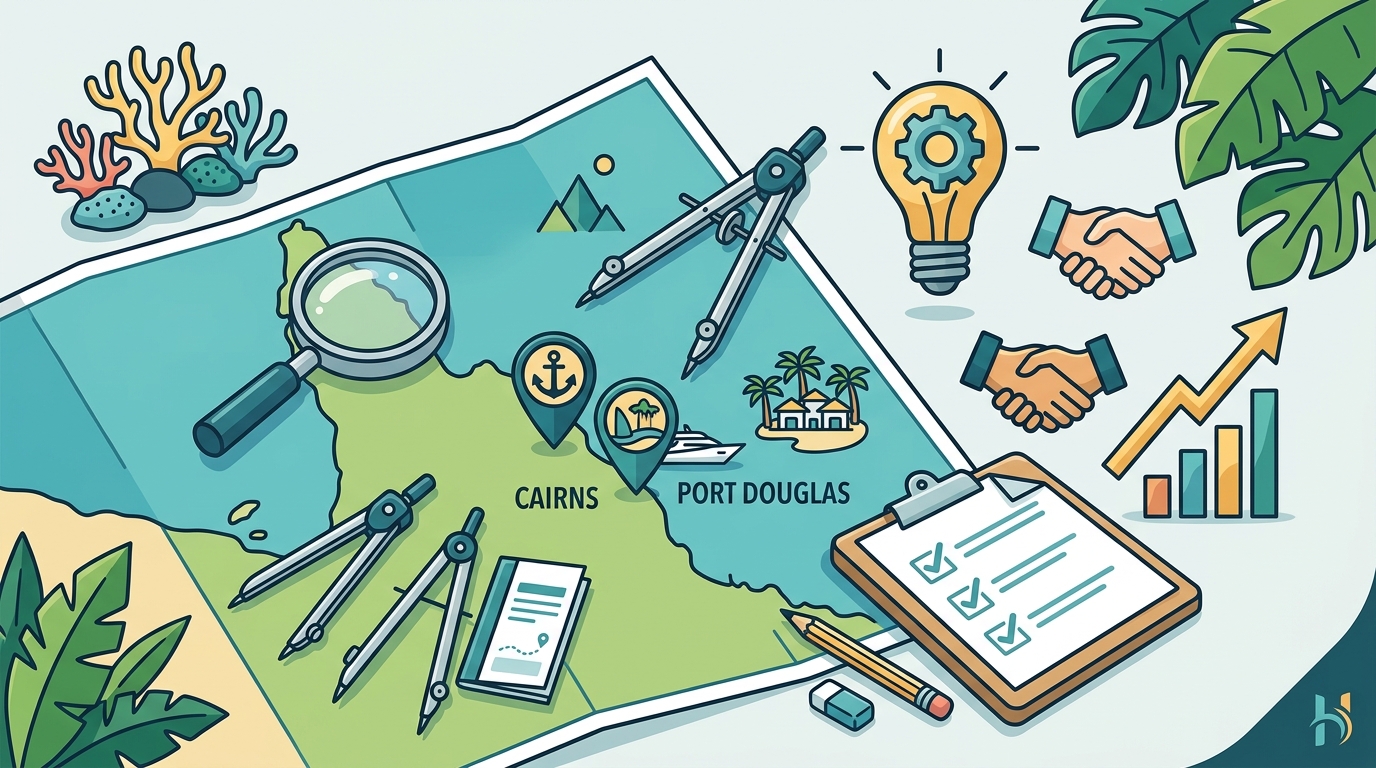
The selection of your base location in Far North Queensland is a critical decision that influences the entire retreat experience. Both Cairns and Port Douglas offer world-class infrastructure, but they serve different strategic purposes for corporate groups.
Cairns is a major metropolitan hub that offers extensive flight connectivity, a wide range of accommodation options, and immediate access to urban amenities. It is ideal for larger groups or those requiring frequent external stakeholder meetings. The city provides a robust infrastructure for corporate events, including large conference centers and diverse dining options. However, the urban environment can sometimes distract from the retreat's immersive nature.
Port Douglas is a boutique resort town located approximately 70 kilometers north of Cairns. It offers a more exclusive, tranquil atmosphere that is conducive to deep thinking and relationship building. The concentration of high-end resorts and private villas in Port Douglas makes it easier to secure exclusive use of facilities, which is often a requirement for sensitive leadership discussions. The natural beauty of the Daintree Rainforest and the Great Barrier Reef provides a powerful backdrop for inspiration, yet the smaller scale means fewer logistical distractions.
When making this choice, consider the accessibility for your specific team. If your leadership team is spread across Australia or internationally, Cairns International Airport offers more direct flight options. If the team is primarily domestic or based in Queensland, the short drive or flight to Port Douglas may be worth the added exclusivity. The decision ultimately rests on whether the priority is logistical ease or immersive isolation.
Select Professional Facilitators
One of the most common mistakes in retreat planning is underestimating the need for professional facilitation. Internal leaders often struggle to remain neutral when guiding their peers through difficult conversations. Facilitation is the practice of guiding a group through a process to achieve a specific outcome while maintaining neutrality and focus. A professional facilitator brings structure to chaos, ensuring that every voice is heard and that the group stays on track.
Look for facilitators who have specific experience in leadership development and corporate retreats. They should be adept at reading group dynamics and intervening when necessary to prevent conflict from derailing progress. Hidden Door Experiences specializes in creating custom team-building and strategic workshops that are tailored to the unique needs of leadership teams. Their approach combines psychological safety with high-performance challenges, which is essential for unlocking potential in executive groups.
When evaluating potential facilitators, ask about their methodology. Do they use established frameworks for strategic planning? How do they handle resistance or disengagement? A skilled facilitator will not just lead activities; they will help the team translate insights into actionable business strategies. They will also manage the energy of the room, knowing when to push for deeper work and when to allow for reflection and connection.
Consider the integration of experiential learning. Traditional boardroom discussions often fail to break down hierarchical barriers. Activities that require collaboration, such as creative challenges or outdoor adventures, can reveal hidden strengths and weaknesses in team dynamics. These insights are invaluable for leadership development and can be leveraged to improve daily operations back in the office.
Design Strategic Activities
The activities chosen for your retreat should directly support your defined objectives. Avoid generic team-building exercises that feel disconnected from the business context. Instead, design experiences that mirror the challenges your leadership team faces.
For example, if the goal is to improve cross-functional collaboration, consider an activity that requires diverse skill sets to succeed. Hidden Door Experiences offers programs like Brick Masters, where teams design, build, and pitch a LEGO creation. This exercise forces leaders to communicate clearly, delegate effectively, and innovate under pressure. The tangible outcome of the activity provides a metaphor for the company's strategic projects, making the learning points more memorable.
Another powerful option is the Breaking Barriers interactive keynote. This session is designed to help teams identify and overcome the mental and structural barriers that limit performance. It is particularly effective for leadership teams that are stuck in traditional ways of thinking or are resistant to change. The combination of storytelling, interactive elements, and practical tools makes it a high-impact addition to any retreat agenda.
Balance structured work with unstructured time. Leadership teams need space to connect on a personal level. This informal bonding builds trust, which is the foundation of effective collaboration. Schedule time for meals, evening socials, and optional excursions. In Port Douglas, a sunset cruise or a visit to the Daintree Rainforest can provide the perfect setting for informal conversations that often yield the most significant insights.
Manage Logistics and Compliance
Logistical precision is the backbone of a successful retreat. This includes venue selection, accommodation, catering, and transportation. In tropical Queensland, weather is a significant factor. Have contingency plans for outdoor activities in case of rain or extreme heat. Ensure that your venue has reliable Wi-Fi and AV equipment for presentations and virtual connections if needed.
Consider the dietary and accessibility needs of all participants. Work with your caterer to provide diverse menu options that cater to various dietary restrictions. Ensure that the venue is accessible for any team members with mobility challenges. Attention to these details demonstrates respect for your team and allows them to focus entirely on the retreat's objectives.
Finally, establish clear communication protocols before the retreat. Share the agenda, dress code, and expectations with all participants well in advance. Encourage them to disconnect from daily work and fully engage in the retreat. This mental preparation is crucial for maximizing the return on investment for both the company and the individuals involved.
Key Takeaways
- Strategic Alignment: Define clear objectives before planning to ensure the retreat drives business results.
- Location Strategy: Choose Cairns for connectivity and Port Douglas for exclusivity and immersion.
- Professional Facilitation: Hire neutral experts to guide discussions and maintain focus on outcomes.
- Experiential Learning: Use custom activities like Brick Masters to reveal team dynamics and improve collaboration.
- Logistical Precision: Plan for weather contingencies and accessibility to ensure a seamless experience.
- Balance: Mix structured strategic work with unstructured bonding time to build trust.
- Measurement: Establish benchmarks to evaluate the retreat's impact on team performance.
Frequently Asked Questions
How long should a leadership retreat in Cairns or Port Douglas last?
A three-day retreat is typically optimal for strategic planning. This allows sufficient time for deep work, relationship building, and action planning without causing fatigue.
What is the best time of year to host a retreat in Far North Queensland?
The dry season, from May to October, is the ideal time. The weather is pleasant, and there is no risk of tropical cyclones or stinger season, which occurs from November to May.
Can Hidden Door Experiences facilitate strategic workshops?
Yes, Hidden Door Experiences specializes in custom team-building and strategic workshops that are tailored to leadership teams, focusing on communication, collaboration, and performance.
How do I choose between Cairns and Port Douglas for my retreat?
Choose Cairns for larger groups or those needing extensive flight connectivity. Choose Port Douglas for smaller, more exclusive groups seeking a tranquil and immersive environment.
What types of activities are best for leadership teams?
Activities that require collaboration, problem-solving, and communication are most effective. Examples include creative challenges, interactive keynotes, and outdoor adventures that mirror business challenges.
How do I measure the success of a leadership retreat?
Measure success by comparing pre-retreat objectives with post-retreat outcomes. Look for changes in team alignment, decision-making speed, and employee feedback on the retreat's value.
Is it necessary to hire a professional facilitator?
Yes, a professional facilitator ensures neutrality, keeps the group on track, and helps navigate difficult conversations, which is essential for productive leadership discussions.
What should I consider when selecting a venue in Port Douglas?
Consider the venue's exclusivity, AV capabilities, proximity to activities, and ability to provide private dining and meeting spaces for sensitive discussions.
Book Your Leadership Retreat
Planning a leadership retreat in Cairns or Port Douglas is a significant investment in your organization's future. By defining clear objectives, choosing the right location, and partnering with professional facilitators, you can create an experience that drives real business results. Hidden Door Experiences is ready to help you design a custom retreat that inspires your leadership team and strengthens your organizational culture. Contact us today to start planning your strategic retreat.