

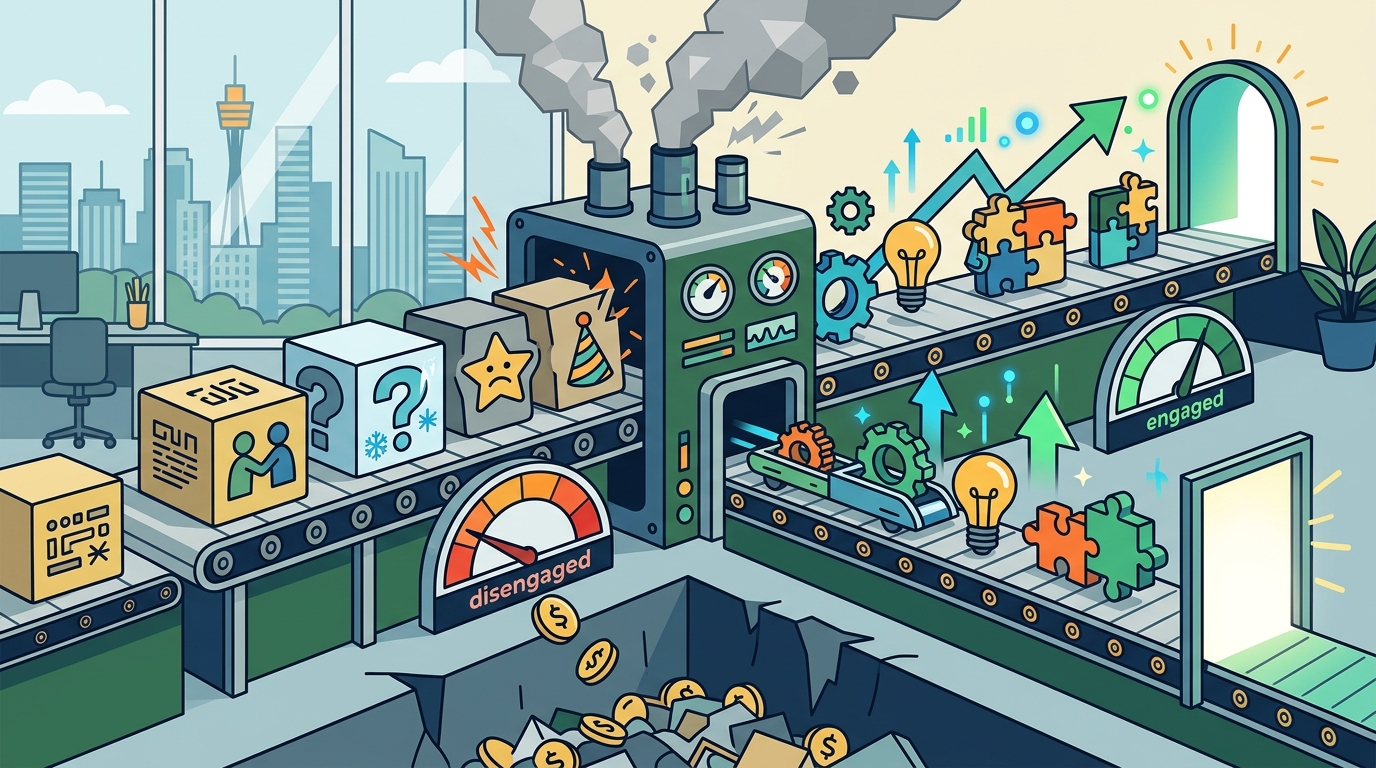
Low employee engagement is not just a morale issue. It is a structural failure in how organizations allocate their cultural resources. According to recent workplace analysis, disengaged employees cost the global economy billions in lost productivity annually. The traditional approach to fixing this involves mandatory fun, forced icebreakers, and awkward trust falls. These methods rarely work. They often make the problem worse by highlighting the disconnect between management and staff. The solution lies in designing experiences that feel human, energizing, and genuinely impactful. This guide explains how to replace cringe with connection. (Hidden Door Experiences Australia)
Why Traditional Team Building Fails
Most corporate events fail because they prioritize entertainment over engagement. When teams are forced to participate in activities that feel artificial, they disengage further. This is known as the "cringe factor." It creates a barrier between colleagues rather than breaking it down. The goal of team building should not be to make people laugh at each other. It should be to make them work together toward a shared outcome. (Hidden Door Experiences Australia)
Hidden Door Experiences has spent 18 years refining this approach. We launched in 2008 with a simple idea: curiosity and connection. Those principles still guide everything we do today. A hidden door represents the moment you turn off autopilot and step into imagination. It is where teams pause, lean in, and engage differently. This is the opposite of the standard corporate retreat. (Blog Hidden Door Experiences)
When you look at the data, the difference is clear. Teams that participate in well-designed, collaborative challenges show measurable improvements in communication and trust. Teams that endure forced fun often report higher stress levels. The choice is yours. You can continue with the status quo or choose a path that delivers real outcomes at work. (Corporate Events Australia Hidden)
Designing Human-Centric Experiences
To solve low engagement, you must first understand what drives it. Engagement comes from autonomy, mastery, and purpose. Activities that strip these away will fail. Activities that enhance them will succeed. This means avoiding generic workshops that feel like extended meetings. Instead, opt for experiences that feel like play but deliver professional results.
One effective method is the use of creative challenges. These allow teams to express themselves in low-stakes environments. For example, The Big Picture turns small canvases into one large artwork. This reinforces the concept of working collaboratively toward one common outcome. It is not about the art. It is about the negotiation, the compromise, and the shared vision.
Another powerful tool is immersive storytelling. Hostage is an immersive escape room activity designed to get people thinking and collaborating. It forces teams to communicate under pressure. It reveals leadership styles and problem-solving approaches in real-time. This is valuable data for any organization looking to improve its internal dynamics.
The key is to select activities that align with your team’s personality. A group of developers might prefer the logical structure of Brick Masters. A sales team might thrive on the competitive energy of Survivor. Matching the activity to the audience is critical for success.
Top Activities for Real Connection
Not all team building is created equal. Some activities are designed to be fun. Others are designed to be transformative. Here are three standout options that consistently deliver high engagement scores.
| Activity Name | Core Mechanic | Best For | Engagement Driver |
|---|---|---|---|
| Brick Masters | LEGO® Design & Pitch | Creative Teams | Collaborative Innovation |
| The Big Picture | Shared Art Creation | Large Groups | Unified Vision |
| Hostage | Escape Room Logic | Problem Solvers | Pressure Communication |
| Bikes 4 Tykes | Charity Build | Values-Driven Teams | Purpose & Impact |
Each of these activities is designed to feel human. They avoid the trap of forced fun. Instead, they create moments that people actually remember. This is the difference between a day that is wasted and a day that changes how your team works together.
Choosing the Right Format
The format of your event matters as much as the activity. Indoor events offer control over the environment. Outdoor events offer energy and novelty. Virtual events offer accessibility. The best choice depends on your team’s current state.
If your team is burnt out, an outdoor adventure like Survivor: Byron Bay can provide a much-needed reset. The fresh air and physical activity help break mental blocks. If your team is remote, a virtual experience can bridge the gap. However, the quality of the virtual experience must be high. Low-quality virtual events are the new cringe.
Location also plays a role. Sydney offers a mix of urban and coastal options. Melbourne provides a vibrant cultural backdrop. Brisbane teams have a low tolerance for rubbish team building. They prefer authenticity and directness. Tailoring the experience to the local culture is essential for acceptance.
Key Takeaways
- Disengaged employees cost the global economy billions in lost productivity annually.
- Hidden Door Experiences has been named Australia’s Best Team Building Company by Spice Magazine six years running.
- Over 631,000 participants have experienced their programs across companies like Google and Microsoft.
- Activities like Brick Masters focus on collaborative innovation rather than forced fun.
- The "cringe factor" arises from artificial activities that ignore team personality.
- Matching the activity to the audience is critical for long-term engagement.
- Location-specific tailoring ensures cultural relevance and higher participation rates.
Frequently Asked Questions
How do I know if my team building is working?
Look for changes in communication patterns and willingness to collaborate. If teams are more open and proactive after the event, it is working. If they are relieved it is over, it failed.
What is the best team building activity for large groups?
The Big Picture is ideal for large groups. It allows everyone to contribute to a single, unified outcome.
Can team building be done virtually?
Yes, but it must be high-quality. Virtual experiences should feel interactive and engaging, not like a webinar.
Why do traditional icebreakers fail?
They force vulnerability without building trust first. This creates discomfort rather than connection.
How long should a team building event be?
Half-day or full-day events are most effective. They allow enough time for immersion and reflection.
What industries benefit most from creative team building?
All industries benefit, but tech and creative sectors often see the highest ROI due to the nature of their work.
Is charity team building effective?
Yes, it adds a layer of purpose that boosts morale and engagement significantly.
Ready to Transform Your Culture?
Stop wasting time on events that feel like a chore. Start building a culture that people want to be part of. Hidden Door Experiences is ready to design a solution that fits your team’s unique needs. Book a discovery call today to discuss your goals and get a custom quote.