
How to Organize a Charity Bike Building Event for a Large Corporate Conference
Planning a charity bike building event for a large corporate conference requires balancing logistical precision with emotional impact. According to recent industry data on corporate social responsibility, 73% of global consumers consider a company's environmental commitments when making purchasing decisions. This statistic highlights why integrating tangible charitable outcomes into your conference agenda is no longer optional. It is a strategic imperative for brand reputation and employee engagement.
Understanding the Impact of Bike Building
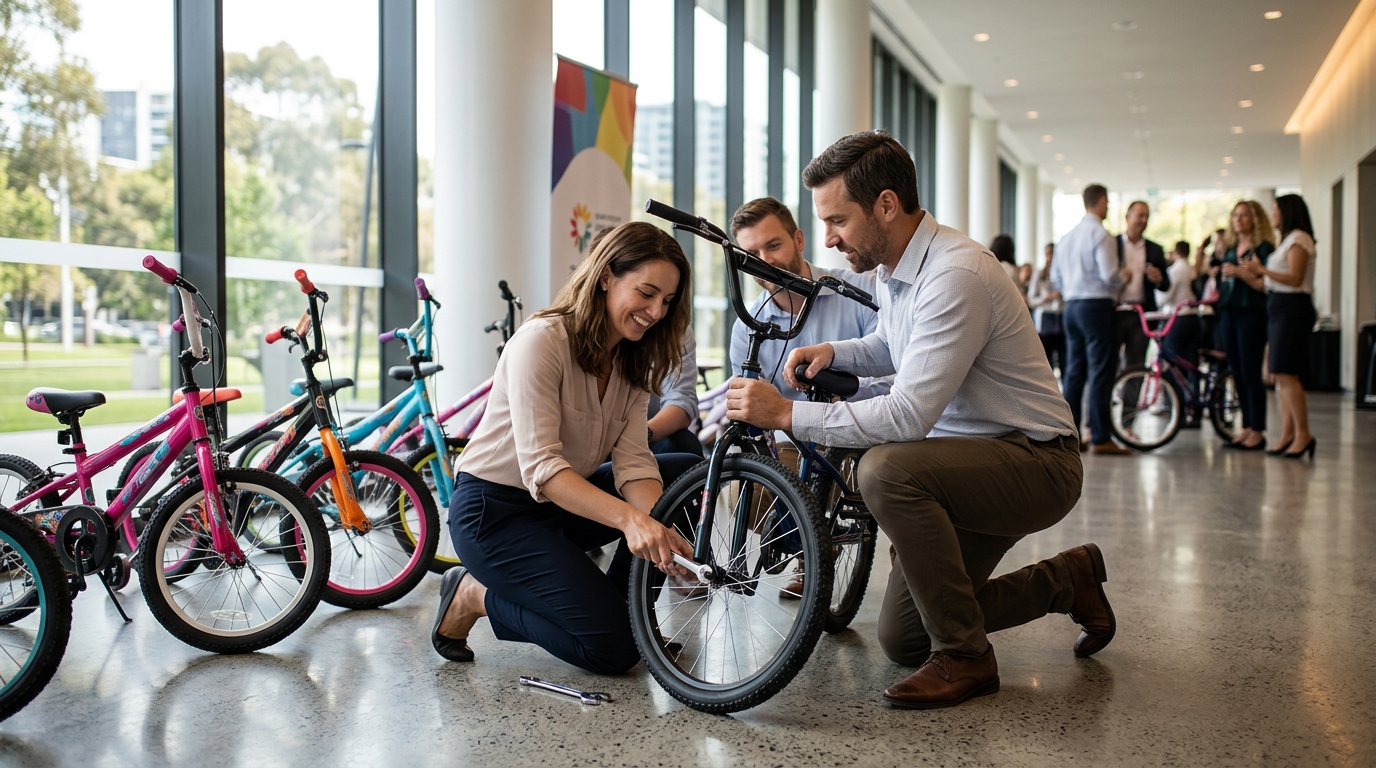
A charity bike building event is not merely a team-building exercise. It is a high-visibility act of corporate social responsibility. The core concept involves teams assembling bicycles that are subsequently donated to children in need, often through partnerships with local charities or international aid organizations. This activity bridges the gap between abstract corporate values and tangible human impact.
The psychological benefit for participants is significant. When employees work together to create something that directly improves another person's life, it fosters a sense of shared purpose. This aligns with the principles of purpose-driven team building, which focuses on creating memorable, meaningful experiences rather than forced fun. The result is a deeper connection to the company's mission and a stronger sense of community among colleagues.
Furthermore, the visual nature of bike building provides excellent content for internal and external communications. The colorful bikes, the smiles of the children receiving them, and the collaborative effort of the team create powerful narratives. These narratives can be leveraged in annual reports, social media campaigns, and recruitment efforts to demonstrate the company's commitment to social good.
Choosing the Right Partner
For a large corporate conference, attempting to manage the logistics of bike building in-house is risky. You need a partner who understands both the technical aspects of assembly and the emotional nuances of charity events. Hidden Door Experiences has spent 18 years designing team building activities that deliver real outcomes. Their expertise lies in creating experiences that feel human, energizing, and genuinely impactful.
When evaluating potential partners, look for those with a proven track record in charity initiatives. For instance, Hidden Door's Bikes 4 Tykes program is an engaging and rewarding experience where teams complete challenges and collect bike parts before building kids' bikes and donating them to children in need. This specific program is designed to be inclusive and accessible, ensuring that all participants, regardless of their mechanical aptitude, can contribute meaningfully.
Additionally, consider the partner's ability to scale. Large conferences often involve hundreds or even thousands of attendees. A reliable partner will have the infrastructure to handle large volumes of participants without compromising the quality of the experience or the safety of the event. They should also have established relationships with local charities to ensure the bikes are delivered and utilized effectively.
Logistics and Scale
Organizing a bike building event for a large group requires meticulous planning. The first step is to determine the venue. The space must be large enough to accommodate all participants, provide ample room for assembly stations, and allow for easy flow of movement. Hidden Door Experiences offers team building in Sydney, Melbourne, and Brisbane, among other locations, ensuring they can bring the experience to your conference site.
Next, consider the timeline. Bike building is not a quick activity. It typically takes several hours to complete, depending on the complexity of the bikes and the number of participants. You must integrate this into your conference agenda carefully. It is best to schedule it during a dedicated block of time, such as a morning or afternoon session, rather than squeezing it into a lunch break.
Communication is key. Ensure that all participants understand the purpose of the event before it begins. Provide context about the charity, the impact of the bikes, and the goals for the day. This preparation helps to set the tone and ensures that everyone is aligned with the mission. Hidden Door Experiences provides detailed briefings and facilitation to guide teams through the process, ensuring a smooth and engaging experience.
Maximizing Engagement
To maximize engagement, incorporate elements of competition and collaboration. While the primary goal is charity, adding a competitive layer can boost energy and participation. For example, you can challenge teams to build the most bikes, the fastest, or the most creatively designed bikes. This adds a layer of excitement and friendly rivalry to the event.
Additionally, consider integrating other team-building activities to complement the bike building. Hidden Door Experiences offers a range of creative experiences, including Brick Masters and The Big Picture, which can be combined with bike building to create a comprehensive corporate event. This approach ensures that the event is not just a one-off activity but part of a broader strategy to strengthen team dynamics.
Another way to enhance engagement is to involve senior leadership. When executives participate in the bike building alongside their teams, it sends a powerful message about the company's values. It demonstrates that leadership is committed to the cause and is willing to get their hands dirty. This can significantly boost morale and foster a more inclusive culture.
Post-Event Measurement
After the event, it is crucial to measure its impact. This involves gathering feedback from participants, tracking the number of bikes built, and documenting the delivery of the bikes to the charity. Use this data to create a report that highlights the success of the event and its impact on the community. This report can be shared internally to celebrate the achievement and externally to showcase the company's commitment to social responsibility.
Furthermore, consider the long-term impact on employee engagement. Studies show that employees who feel their work matters are more engaged. By participating in a meaningful charity event, employees can see the direct impact of their work, which can lead to increased job satisfaction and retention. This is a critical metric for HR and leadership teams to track.
Key Takeaways
- Strategic Alignment: Charity bike building aligns with corporate social responsibility goals, with 73% of consumers valuing environmental commitments.
- Expert Partnership: Partnering with experienced providers like Hidden Door Experiences ensures scalability and emotional impact.
- Logistical Precision: Careful venue selection and timeline integration are essential for large-scale events.
- Engagement Boosters: Incorporating competition and leadership participation enhances team dynamics.
- Measurable Impact: Tracking bikes built and employee feedback provides tangible ROI for the initiative.
- Brand Reputation: High-visibility charity events improve external brand perception and internal morale.
- Long-Term Benefits: Meaningful work experiences contribute to higher employee retention and satisfaction.
Frequently Asked Questions
How many bikes can a team build in one session?
The number of bikes built depends on the team size and the complexity of the bike. Typically, a team of 10-15 people can build between 5 to 10 bikes in a 2-3 hour session. Hidden Door Experiences can customize the pace to fit your conference schedule.
Is technical knowledge required to build the bikes?
No technical knowledge is required. The bikes are designed to be assembled with basic tools and clear instructions. Facilitators from Hidden Door Experiences guide teams through every step, ensuring everyone can contribute regardless of their mechanical skills.
How do you ensure the bikes are delivered to the charity?
Hidden Door Experiences has established partnerships with reputable charities. They handle the logistics of transporting the bikes from the event venue to the charity, ensuring they are delivered safely and efficiently. Participants often receive photos or updates of the bikes being used.
Can we customize the bike building activity?
Yes, the activity can be customized to include branding, specific challenges, or integration with other team-building exercises. Hidden Door Experiences works with clients to tailor the experience to their specific goals and conference theme.
What is the typical cost of a charity bike building event?
The cost varies based on the number of participants, location, and level of customization. Hidden Door Experiences provides tailored quotes based on your specific requirements. Contact them for a detailed estimate.
How does bike building compare to other charity activities?
Bike building is highly interactive and tangible. Unlike donations that are abstract, participants physically create something that improves a child's life. This hands-on approach often leads to higher engagement and emotional connection compared to passive charity activities.
What happens if we have a very large group?
Hidden Door Experiences specializes in large-scale corporate events. They have the resources and experience to manage groups of hundreds or thousands. They will set up multiple assembly lines and provide sufficient facilitators to ensure a smooth experience for all participants.
Ready to Build Impact?
Organizing a charity bike building event for your next corporate conference is a powerful way to demonstrate your company's values and strengthen team bonds. By partnering with experts like Hidden Door Experiences, you can ensure a seamless, impactful, and memorable experience for your team. Contact Hidden Door Experiences today to discuss your event and start planning a meaningful corporate social responsibility initiative.